Electronic-Grade VBC Supplier Audit: Capability to Contract
Evaluating a supplier of electronic-grade vinylbenzyl chloride (VBC) is not a price exercise. By the time a formulation or procurement team enters the evaluation stage, the CAS number and isomer are usually already fixed; what remains open is whether a given supplier can reproduce that specification batch after batch, and whether it can prove it with documents that survive your own incoming inspection.
This guide treats the evaluation as an audit trail rather than a checklist of features. It starts with the identity layer — the four commercial CAS variants, their shared C9H9Cl formula and 152.62 g/mol molecular weight, and the physical and stabilizer data that separate one grade from another. It then moves to the capability layer: isomer ratio control, metal-ion purification, analytical infrastructure and production scale. It ends where most supplier evaluations actually fail, which is delivery assurance — the purchasing terms, acceptance criteria and documentation that turn a capability claim into a purchase order you can enforce.
Jiangsu Juming Chemical Technology Co., Ltd. (Jumingchem), established in 2017 and based in Jiangyin, Wuxi City, Jiangsu, China, is used throughout as a worked example. The company lists all four VBC CAS variants among its main products alongside 5-methyl-1H-benzotriazole (CAS 136-85-6) and BPADA (CAS 38103-06-9), holds ISO 9001 certification, and exports to the USA, Korea, Japan, Taiwan region, Germany, Southeast Asia and the Middle East. Where this article cites supplier-reported outcomes, they are labelled as supplier-reported.

Why a VBC supplier evaluation is really a reproducibility test
A supplier datasheet for vinylbenzyl chloride typically shows a CAS number, an assay figure, a colour description and a packing format. None of those four items tells you whether the drum arriving in nine weeks will match the 200 g sample you qualified last quarter. That gap — between a specification on paper and a released batch in a container — is what a capability audit is designed to close.
The risk profile is asymmetric. In photoresist and membrane chemistry, a single out-of-specification monomer batch can invalidate a lithography formulation run or push a resin's extractables above target long after the delivery has been signed off. The cost of the bad batch is rarely the cost of the material; it is the downstream rework, the re-qualification and the schedule slip. That is why the evaluation question is not "who can supply electronic-grade vinylbenzyl chloride" but "who can supply it identically, repeatedly, with a record that proves it."
The commercial backdrop explains the scrutiny. Fortune Business Insights reported the global photoresist chemicals market at USD 40.30 billion in 2026, up from USD 38.00 billion in 2025, with a forecast of USD 63.77 billion by 2034 (source dated 12 October 2026). Growth of that scale puts pressure on monomer supply lines, and pressure on supply lines is exactly when substitution risk rises and documentary discipline pays for itself.
Identity first: what the four CAS variants tell you — and what they do not
All four commercial grades of vinylbenzyl chloride share the molecular formula C9H9Cl and a molecular weight of 152.62 g/mol. That shared identity is the first thing a buyer must internalise, because it means a formula-and-molecular-weight check will confirm that the material is chloromethylstyrene but will not tell you which isomer is in the drum. Isomer confirmation requires an isomer-specific analytical result, normally a GC isomer distribution on the certificate of analysis.
| Product designation | CAS number | Isomer | Shared identity | Documented grade offer (supplier statement) |
|---|---|---|---|---|
| 4-Vinylbenzyl chloride | 1592-20-7 | para | C9H9Cl / 152.62 g/mol | Pure para-isomer, ≥99% p-VBC |
| 1-(chloromethyl)-2-vinylbenzene | 22570-84-9 | ortho | C9H9Cl / 152.62 g/mol | Pure ortho-isomer, ≥98% o-VBC |
| 1-(chloromethyl)-3-vinylbenzene | 39833-65-3 | meta | C9H9Cl / 152.62 g/mol | Pure meta-isomer, ≥98% m-VBC; approx. 0.1% TBC stabilizer noted |
| Vinylbenzyl chloride (mixed) | 30030-25-2 | mixed o/m/p | C9H9Cl / 152.62 g/mol | Any custom mixture ratio of o/m/p isomers |
Three further identity signals belong in the evaluation file. The first is appearance and colour: both are standard release-test items for these products, and the reported values should be compared against your qualified reference batch rather than accepted as a formality. The second is the boiling point and density pair. These two physical values are the most practical cross-check that the liquid in the container is the grade on the label, because they are temperature-dependent and therefore expose both a mislabelled grade and a mis-reported test basis; ask for the values as reported on the batch certificate and confirm the temperature at which they were measured. The third is the stabilizer.
The meta isomer (CAS 39833-65-3) is noted with an approximately 0.1% TBC (4-tert-butylcatechol) stabilizer addition. The exact figure belongs on the certificate of analysis for each batch, because an inhibitor does two things at once: it extends shelf life by suppressing premature polymerization, and it enters your reactor as a radical scavenger that can shift cure or molecular-weight behaviour. A move from stabilised to unstabilised material at the same nominal assay is, for formulation purposes, a different raw material — and it is one of the most common undocumented changes in monomer supply.
Audit rule: a formula and molecular weight confirm the substance; only an isomer distribution and a stabilizer figure confirm the grade. Write both into the specification before you compare quotations.
Capability claims worth testing — and the evidence that supports each
Capability in electronic-grade monomers is not a single attribute. It is the combination of isomer control, trace-metal control, analytical proof and production scale. Each element can be tested, and each has a specific document or test that either supports or fails to support it.
| Capability claimed | Evidence to request | How the buyer tests it |
|---|---|---|
| Isomer ratio control (≥99% p-VBC, ≥98% o-VBC, ≥98% m-VBC, custom o/m/p blends) | GC isomer distribution on every batch certificate; chromatogram available on request | Run your own GC on a blind sample and compare peak ratios against the supplier certificate |
| ppb-level metal-ion control (metal impurities <10 ppb, specification set per customer) | Product-specific metal-ion specification, analytical method and detection limit | Request three to five consecutive batch certificates and trend the reported values instead of reading one |
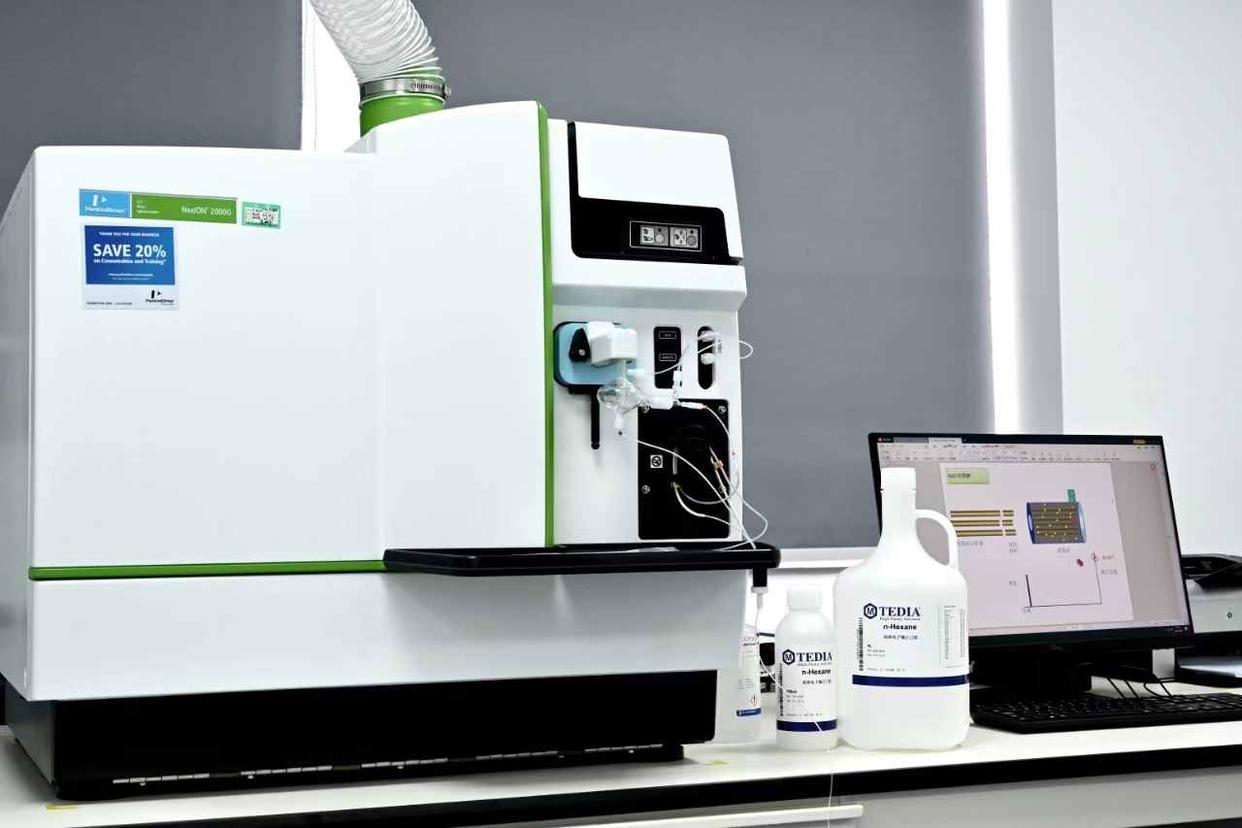
| Analytical infrastructure (ICP-MS, HPLC and GC systems) | Instrument list, calibration and maintenance policy, method reference for each certificate line | Remote or on-site audit: ask which method produced each reported value |
| Scale flexibility (gram-level R&D through hundred-ton industrial production) | Product-line capacity statement, not a company-wide output figure | Ask specifically for electronic-grade VBC release capacity per month and current order-book position |
| OEM/ODM and full-chain CDMO (process R&D, pilot scale-up, commercial production) | Pilot plant and GMP workshop evidence; committed development timeline | Set a dated milestone: first validation sample and OEM customisation delivery windows |
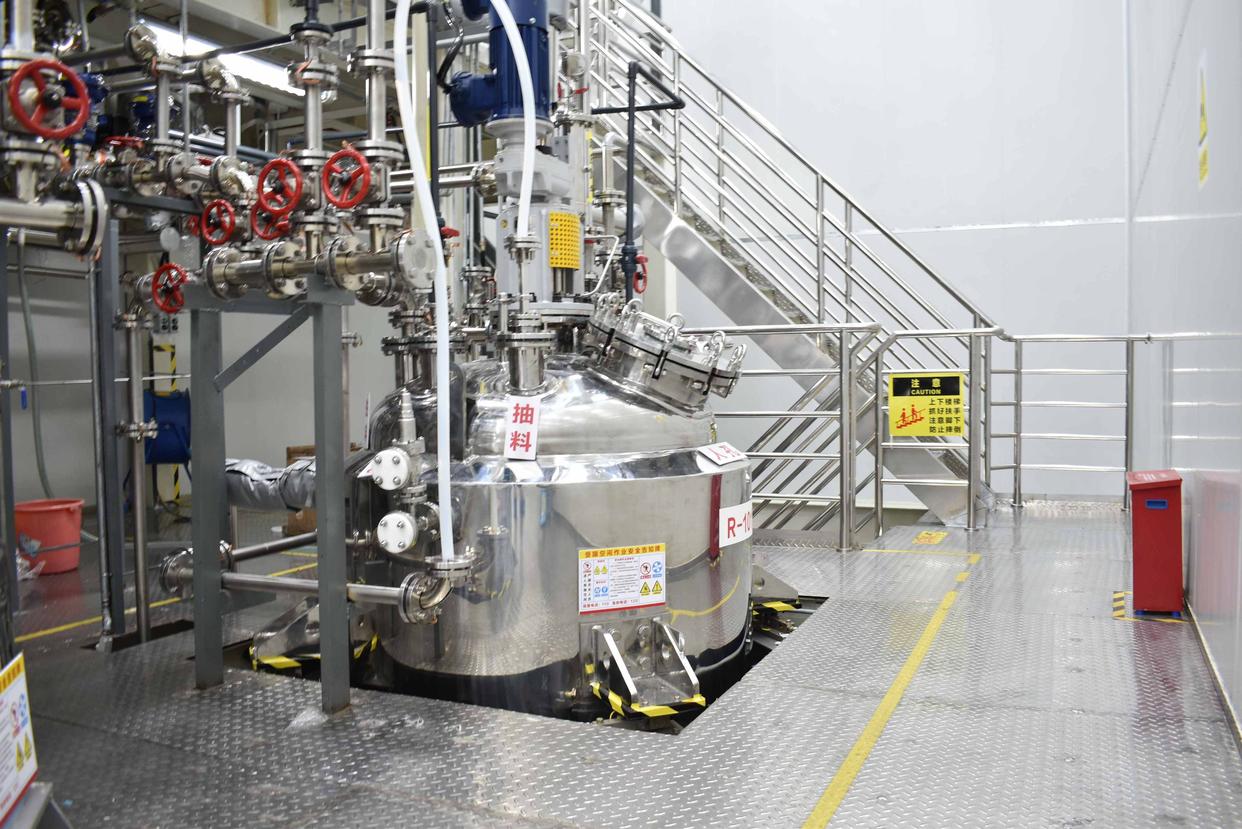
The scale question deserves particular care, because headline capacity figures are almost always portfolio-level. Jumingchem reports an annual output of 60,000 tons and a monthly capacity of 5,000 tons across its business, together with a total factory area of 78,000 m², a 3,000 m² R&D centre, a 300 m² pilot plant and a 600 m² GMP workshop. Those numbers describe the company, not the electronic-grade VBC line. A capability audit should therefore ask a narrower question: how much electronic-grade VBC can be released to specification in a month, and what is the current committed load against it? A supplier that answers the narrow question with a specific figure is materially more useful than one that repeats the portfolio total.
The same discipline applies to purity. A ppb-level purification capability is a statement about what a plant can achieve. It becomes a procurement fact only when it appears as a numeric limit, with a named method and a detection limit, on a batch certificate tied to your purchase order. Between those two states sits the entire difference between a marketing claim and a release specification — and the buyer's job at the evaluation stage is to move the supplier across that line.
A seven-step evaluation sequence for the execution stage
Evaluation that does not end in contract language tends to be repeated six months later. The sequence below is ordered so that each step narrows the next, and so that the output of the final step can be pasted directly into a purchase order.
1. Fix the identity in writing
Specify the CAS number, the isomer, the minimum isomer assay and the analytical method used to determine it. For mixed product (CAS 30030-25-2), specify the target o/m/p ratio and a tolerance band, not simply "mixed". This single step eliminates most subsequent disputes.
2. Ask for batch certificates, not a generic data sheet
A technical data sheet describes a product family; a certificate of analysis describes a drum. Request certificates for the last several production batches and read them as a time series. Stable, tightly clustered values indicate a controlled process; alternating values with no trend indicate a process that is being adjusted to hit specification.
3. Match the analytical method to the claim
Purity by GC and purity by HPLC are not interchangeable numbers, and a metal-ion figure without a stated method is not comparable with your own laboratory result. Confirm the method behind every line you intend to enforce, and confirm the detection limit for electronic-grade metal content.
4. Read the certificate scope and the expiry date
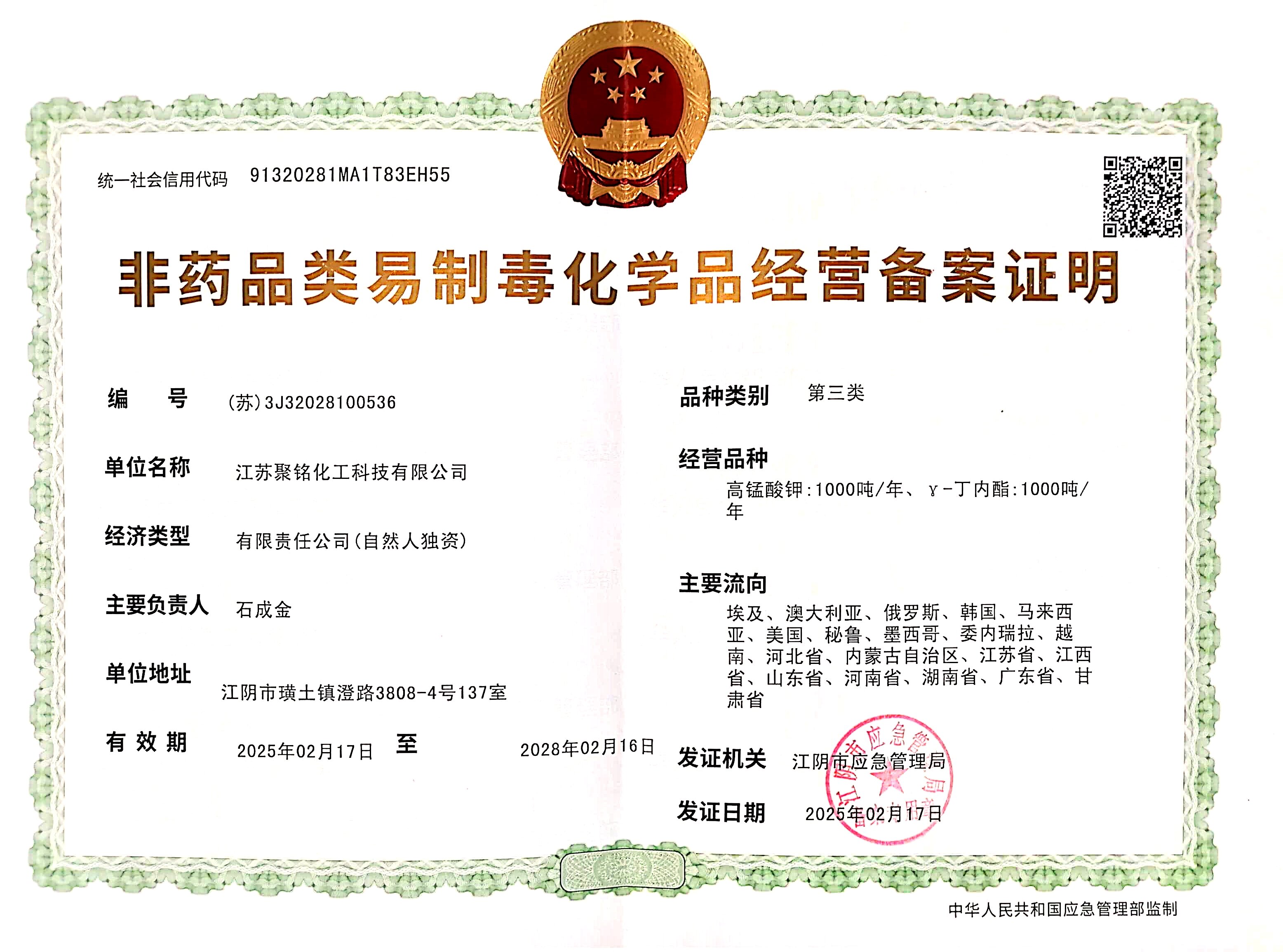
This is where many supplier files quietly fail. Jumingchem's ISO 9001 certificate (NOA2505548, issued 25 July 2025, valid to 24 July 2028) carries a scope of sale of hazardous chemicals within the permitted scope, excluding storage — a sales-scope certificate that does not, by itself, certify a production line. Its RoHS certificate (CKEYS250724006, issued 24 July 2025) has a stated scope of tolyltriazole, so it should not be presented as covering VBC. Its SGS factory audit report (QIP-ASI254749) covered electronic chemicals among other categories but ran to a validity date of 23 May 2026, which means a 2026 buyer should request the current audit cycle rather than accept the expired document. Its regulatory position is separately evidenced by a non-pharmaceutical precursor chemicals filing certificate ((Su) 3J32028100536, valid 17 February 2025 to 16 February 2028) and a hazardous chemicals operation licence (Su(Xi)WHJJZ(Lingang)02864, valid 26 June 2024 to 25 June 2027). Checking scope and currency is not suspicion; it is the normal standard of care in a regulated material category.
5. Run a validation sample against your own method
Supplier-reported project experience indicates that a first validation sample can be delivered within about two weeks and that OEM customisation can be delivered within about six weeks. Use those windows as contractual milestones rather than as reassurances, and test the sample in your own laboratory under your own conditions before releasing volume.
6. Audit the site or the record trail
If a site visit is not practical, audit the record trail instead: batch traceability coding, deviation handling, change-notification policy and retest rules. A supplier that can produce a traceable record for an arbitrary batch six months old is operationally stronger than one that can only produce the certificate for the batch it chose to send you.
7. Convert findings into purchase-order clauses
Every verified capability should become a clause: identity and isomer assay, metal-ion limit and method, inhibitor type and concentration, packaging, documentation set, notification of process change, and the acceptance test that governs payment release.
Delivery assurance: the terms and acceptance criteria to fix before ordering
Delivery assurance is a documentary problem before it is a logistics problem. The terms below reflect Jumingchem's stated commercial and quality arrangements and should be used as a template for what to pin down, not as an assumption about any other supplier.
- Minimum order quantity: 1 kg, which makes a genuine laboratory-scale validation possible before production volume is committed.
- Lead time: 7 to 30 days depending on product and quantity, with OEM customisation reported at approximately six weeks.
- Sea freight: FCL or LCL from Shanghai or Ningbo, typically 15 to 35 days depending on destination, with a temperature-controlled container option available for VBC.
- Air freight: 5 to 7 working days, suited to urgent small orders of high-value electronic-grade material.
- Express: 3 to 5 working days door-to-door for samples and small batches.
- Payment terms: T/T, D/P, Western Union and PayPal.
- Pre-shipment control: full testing of every production batch, a certificate of analysis per shipment, and optional client pre-shipment inspection or third-party SGS/BV inspection; sample confirmation before mass production for new customers.
- Certificate test items: purity by GC or HPLC, moisture, appearance, colour, acid value and, for electronic grade, metal content.
- Receiving inspection: packaging integrity check on arrival, followed by your own identity and purity confirmation against the retained sample.
- Packaging: liquid VBC in 25 kg HDPE drums, 200 kg steel-plastic composite drums or 1000 L IBCs; temperature-controlled packaging for long-distance hot-climate shipping; UN-certified dangerous goods packaging on request.
- Documentation: certificate of analysis with custom test items and format, MSDS in English, Spanish or other languages, custom label design, third-party SGS/BV/Intertek reports, and batch traceability coding.
Two clauses are routinely omitted and are worth adding. The first is a change-notification clause covering inhibitor level, isomer ratio and analytical method, because a silent method change can make two certificates look comparable when they are not. The second is a retained-sample clause requiring the supplier to hold a sealed retention sample per batch for an agreed period, so that any downstream dispute can be resolved by re-testing the actual material rather than a description of it.
Handling requirements belong in the delivery documents as well. VBC must be handled under extremely dry and sealed conditions to prevent moisture-induced hydrolysis, and polymerization is recommended under inert gas protection in anhydrous polar solvents such as NMP or DMAc. Confirm that packaging, container conditioning and transit time are consistent with those requirements before you accept a sailing date.
Matching the grade to the application
Vinylbenzyl chloride is a dual-functional monomer that can be derivatised by chloride displacement and can serve as a starter for various copolymer preparations. That versatility is why the grade decision should be made against the application rather than against the catalogue.
For negative photoresist resins, including electron-beam photoresists, the monomer is a core structural component, and the controlling variables are isomer purity, trace-metal content and batch-to-batch consistency. Supplier-reported project data describes metal impurities below 10 ppb, meeting SEMI Grade 4 standards, in a programme for a photoresist developer that supported verification by a top-tier Korean wafer fab. Whether that outcome transfers to another formulation is a question only your own qualification can answer, but it does indicate the analytical range a supplier must be able to hold.
For homogeneous ion-exchange membranes, ultra-pure water resins and chelating resins, the monomer is used to build the polymer backbone and functional architecture. Here the sensitivity is to monofunctional purity and to any species that can leach or raise conductivity, which places moisture and metal content at the centre of the specification.
For advanced packaging dielectric materials, the monomer contributes to the resin system behind the dielectric layer, and supply continuity matters as much as the certificate: a dielectric qualification that has to be repeated because a supplier changed a raw-material source is an expensive event. Across all three application families, the practical test is the same — ask the supplier to describe which specification parameter it controls most tightly for that use, and then check whether that parameter appears on the certificate.
What a supplier audit cannot settle
An evaluation produces evidence, not certainty, and it is worth being explicit about the boundary. A stated ppb-level purification capability is not a release specification until a numeric limit and method appear on a batch certificate. A certificate covers the scope printed on it, which is why an ISO 9001 scope limited to sales activity and a RoHS scope limited to a different product line should not be read as product qualification for VBC. Project outcomes reported by a supplier — including metal-ion levels, lead-time reductions and multi-year repeat business — are the supplier's own account of its programmes and are useful as capability indicators rather than as independently verified results for your application. And site capability, however well documented, does not replace your own incoming inspection and application qualification.
Frequently asked questions
What documentation should accompany an electronic-grade VBC shipment?
Expect a batch-specific certificate of analysis covering purity by GC or HPLC, moisture, appearance, colour, acid value and metal content for electronic grade, plus an MSDS and the commercial shipping documents. A custom certificate format, third-party SGS/BV/Intertek reports and batch traceability coding can be requested where your quality system requires them. Check that the CAS number, isomer and specification revision on the certificate match your purchase order.
How do I confirm which isomer a batch actually is?
A molecular formula and molecular weight of 152.62 g/mol will only confirm that the material is chloromethylstyrene, because all four commercial grades — CAS 1592-20-7, 22570-84-9, 39833-65-3 and 30030-25-2 — share the formula C9H9Cl. Isomer identity requires a GC isomer distribution on the certificate, supported by physical cross-checks such as boiling point and density at a stated temperature and, for the meta grade, the declared stabilizer level.
Can a supplier customise electronic-grade chemicals as an OEM manufacturer?
Customisation in this category normally covers four dimensions: molecular structure and synthetic route, purity grade including ppb-level metal-ion limits set to the customer's specification, isomer composition such as pure para at ≥99%, pure ortho or meta at ≥98%, or any custom o/m/p ratio, and packaging from 1 kg to ton scale. Jumingchem reports OEM/ODM and full-chain CDMO capability spanning process R&D, pilot scale-up and commercial production, with OEM customisation delivered in approximately six weeks. Verify each dimension against a dated milestone rather than a general statement.
What are the minimum order quantity and payment terms?
The stated minimum order quantity is 1 kg, which allows a validation quantity to be purchased before production volume is committed. Payment terms are T/T, D/P, Western Union and PayPal. Because commercial terms vary by destination and order size, confirm freight basis, insurance and any temperature-controlled container surcharge in the quotation rather than assuming them.
Can I validate a sample before committing to production volume?
Yes. Sample confirmation before mass production is available for new customers, and supplier-reported project timelines place first validation sample delivery at approximately two weeks. Treat the sample as a formal qualification step: test it with your own methods, retain a portion, record the batch number, and compare it against the first commercial delivery as part of your incoming inspection routine.
What lead time should I plan for, and what happens if I need it faster?
Standard lead time is 7 to 30 days depending on product and quantity, before transit. Sea freight from Shanghai or Ningbo typically adds 15 to 35 days, air freight 5 to 7 working days, and express 3 to 5 working days. A 72-hour emergency order response mechanism is reported for urgent requirements, and temperature-controlled container options and UN-certified dangerous goods packaging are available on request. For a first order, plan the validation sample, the analytical confirmation and the production lead time as separate calendar items rather than one.
Conclusion: from capability claim to contract
A defensible supplier evaluation for electronic-grade vinylbenzyl chloride ends with three artefacts: an identity specification that names the CAS number, isomer, assay method and stabilizer level; a capability file that shows which claims are supported by batch-level evidence and which are still company statements; and a purchase order whose acceptance criteria are specific enough to be tested on arrival. Suppliers that can meet a buyer at that level are rare enough to be worth shortlisting deliberately.
Jiangsu Juming Chemical Technology Co., Ltd. publishes its current product range, technical parameters and company information at en.jmchemchina.com, and its electronic-grade chemicals catalogue — covering the VBC isomer range, 5-methyl-1H-benzotriazole and BPADA — can be downloaded here: Jiangsu Juming Chemical Technology catalogue (PDF).
Next step for evaluation-stage buyers: request a validation sample, a current certificate of analysis pack and the documentation set for the specific isomer you intend to qualify. Confirm the specification in writing — CAS number, isomer assay, metal-ion limit with method, and inhibitor level — and use the returned documents as the basis for your purchase-order clauses.
Technical and commercial enquiries: en.jmchemchina.com · sales@jumingchem.com
Have Questions or Need More Details?
Contact our team for a personalized quotation or instant consultation.
Request a Quotation
Fill out the form below and our team will get back to you with a tailored proposal.
WhatsApp Direct Chat
Prefer to chat in real-time? Message us on WhatsApp for instant assistance & quick answers.
- Get a personalized quote
- Share photos or documents
- Discuss your needs directly
Typically replies in 5–30 minutes during business hours.