Electronic-Grade Vinylbenzyl Chloride Isomers: Photoresist and Membrane Application Guide
Buying electronic-grade vinylbenzyl chloride as a single line item hides the one variable a project engineer actually needs to lock down: the isomer. Four CAS-registered materials share the name — 4-Vinylbenzyl chloride (CAS 1592-20-7), 2-Vinylbenzyl chloride (CAS 22570-84-9), 3-(Chloromethyl)styrene (CAS 39833-65-3), and Vinylbenzyl chloride (CAS 30030-25-2) — and each is documented for the same downstream family: negative photoresist resins, E-beam photoresist, advanced packaging dielectric materials, homogeneous ion-exchange membranes, ultra-pure water resins, and chelating resins. This guide is written for project teams that must complete the isomer-to-application match before a requisition is raised, and it shows how documented liquid properties, the shared molecular formula C9H9Cl, molecular weight 152.62, and stabilizer content such as approximately 0.1% TBC in 3-(Chloromethyl)styrene inform project fit.
Jiangsu Juming Chemical Technology Co., Ltd. (Jumingchem), established in 2017 and located in Jiangyin, Wuxi City, Jiangsu, China, researches, develops, produces, and sells high-end electronic chemicals for semiconductors. Its main products include 5-Methyl-1H-benzotriazole, 4-Vinylbenzyl chloride, 1-(chloromethyl)-2-vinylbenzene, Vinylbenzyl chloride, and BPADA. The company is used as the worked example throughout this guide because its published product data covers all four vinylbenzyl chloride CAS numbers at electronic grade.
Why Isomer Identity Is a Project Decision, Not a Catalog Detail
The defining problem is not availability. It is that three separate specification variables get collapsed into one purchase line.
Most technical sourcing teams start from a category search for electronic-grade chemicals and then narrow to granularity, packaging, and price. For a bulk resin intermediate that sequence works. Once vinylbenzyl chloride enters a lithography or membrane line, it stops working, because the formulation upstream of the purchase order was fixed against a specific isomer or a specific mixed-ratio product. A delivery that carries a different CAS number does not degrade the project — it invalidates the batch.
Three variables that decide whether a batch fits
Isomer identity. Vinylbenzyl chloride (CAS 30030-25-2) is a mixture of the 3- and 4-isomers. It is not 4-Vinylbenzyl chloride (CAS 1592-20-7), and it is not 2-Vinylbenzyl chloride (CAS 22570-84-9). These are three distinct commercial products, each with its own EINECS entry and its own documented constants. Treating the mixed grade as a drop-in substitute for a single isomer is the most common specification error in this product family.
Stabilizer and inhibitor system. 3-(Chloromethyl)styrene is supplied with approximately 0.1% TBC stabilizer. The mixed Vinylbenzyl chloride grade contains 50–100 ppm tert-butylcatechol as inhibitor. On a specification sheet these numbers look trivial. In a formulation they are not: both the inhibitor loading and the incoming monomer weight feed directly into the inhibitor balance the formulator has already built, and a supplier change can shift both at once.
Handling and storage window. 4-Vinylbenzyl chloride is insoluble in water and is recommended for storage at 2–8 °C. The mixed Vinylbenzyl chloride product is recommended for storage at −20 °C. The downstream reaction environment is equally specific: because the reactive groups are moisture sensitive, polymerization is recommended under inert gas protection such as nitrogen or argon, in an anhydrous polar solvent such as NMP or DMAc, with a fully sealed and temperature-controlled feed. A buyer who validates the monomer but not the cold-chain and packaging path has validated only half the project.
Decision rule: the documented downstream application set is the same for all four CAS numbers. The differences that drive selection are the isomer itself, the stabilizer or inhibitor loading, the recorded physical constants, and the storage window — not a documented performance ranking.
Where Electronic-Grade Vinylbenzyl Chloride Sits in the Materials Picture
Electronic-grade chemicals and materials form a large and regionally concentrated slice of the semiconductor supply chain. Grand View Research estimated the global electronic chemicals and materials market at USD 78.5 billion in 2025, and SEMI reported global semiconductor materials revenue of USD 73.2 billion in 2025. Regional concentration is significant: Grand View Research attributed 66.6% of electronic materials and chemicals market revenue in 2025 to Asia Pacific.
Photoresist is a smaller but strategically weighted segment within that total. Grand View Research estimated the electronic-grade photoresist market at USD 4.96 billion in 2024. Published figures for this segment vary with scope, particularly over whether developers, strippers, and other ancillary chemistries are counted inside or outside the boundary.
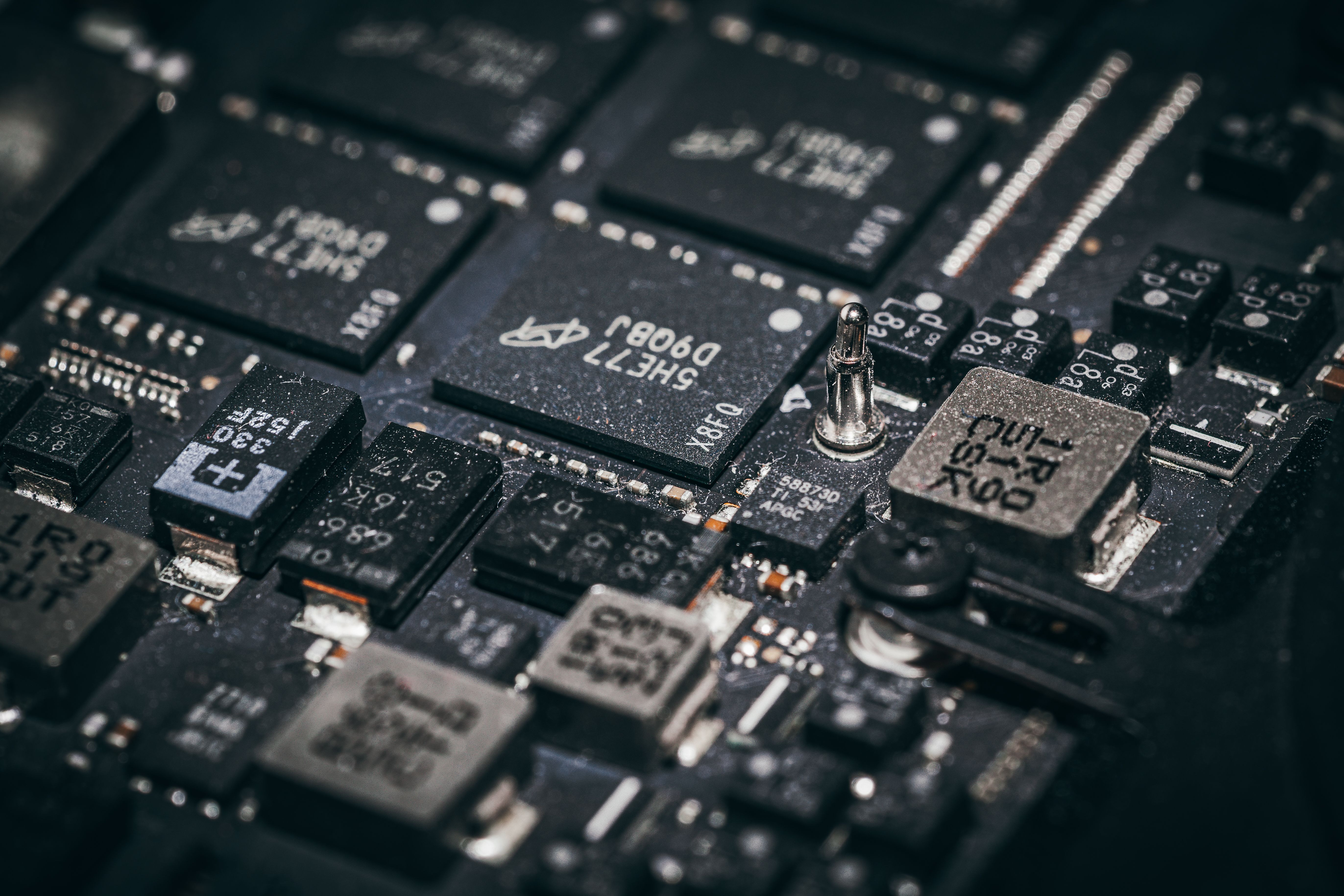
The monomer layer sits upstream of all of it. Vinylbenzyl chloride isomers are documented for semiconductor chip manufacturing and photolithography, display panels including TFT-LCD and OLED, LED chips, and PCB printed circuit boards. That breadth is why isomer discipline matters more here than in a single-application specialty: the same CAS number can be quoted into a photoresist program, a membrane program, and a resin program in the same quarter, with three different acceptance criteria attached.
Corrosion inhibitor chemistry occupies an adjacent position in the same production environment. The global corrosion inhibitors market was estimated at USD 8.79 billion in 2024 by Market Research Future. That matters to this guide because photomask-adjacent resin formulations and semiconductor cleaning steps pull in benzotriazole-family materials alongside the vinylbenzyl chloride monomers — frequently under one project scope and often under one supplier relationship.
The Four Electronic-Grade Vinylbenzyl Chloride Isomers
All four products share the molecular formula C9H9Cl and a molecular weight of approximately 152.62. The differences that matter to a project team are set out below, using the documented product data for each CAS number.
4-Vinylbenzyl chloride — CAS 1592-20-7
Product name: 4-Vinylbenzyl chloride
Synonyms: 4-(chloromethyl)styrene; 1-(chloromethyl)-4-ethenylbenzene
Model designation: JM 1592-20-7
CAS: 1592-20-7 | EINECS: 216-471-2
Molecular formula: C9H9Cl | Molecular weight: 152.62
Boiling point: 229 °C (lit.) | Density: 1.083 g/mL at 25 °C (lit.)
Vapor density: 5.3 (vs air) | Vapor pressure: 1 mm Hg (56.1 °C)
Refractive index: n20/D 1.572 (lit.) | Flash point: 221 °F
Storage: 2–8 °C | Water solubility: insoluble in water; sparingly soluble in chloroform
Form and material: liquid; colorless to pale yellow transparent liquid
Documented use: core monomer for high-performance negative photoresist resins such as E-beam photoresist, advanced packaging dielectric materials, homogeneous ion-exchange membranes, ultra-pure water resins, and chelating resins
The commercial description of this grade emphasizes dual functionality: it participates in polymerization through the vinyl group and can be derivatized at the chloromethyl group. The same description lists it as a component of ion-exchange resins, photoresist polymers, cross-linkable fibers, coupling agents, and electroconducting polymers, and as a starter for a range of copolymer preparations. For a project that needs both a controlled backbone and a post-polymerization functionalization step, that dual character is the reason the para isomer appears in the formulation discussion at all. It is also the only one of the four for which a water solubility statement and a lit. density are recorded in the product data.
2-Vinylbenzyl chloride — CAS 22570-84-9
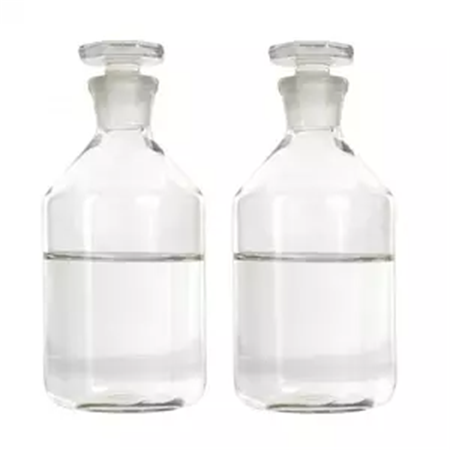
Product name: 1-(chloromethyl)-2-vinylbenzene
Synonyms: 2-vinylbenzyl chloride; 2-(chloromethyl)styrene; o-chloromethylstyrene
Model designation: JM 22570-84-9
CAS: 22570-84-9 | EINECS: 245-092-5
Molecular formula: C9H9Cl | Molecular weight: 152.62
Boiling point: 223.4 ± 9.0 °C (Predicted)
Density: 1.066 ± 0.06 g/cm³ (Predicted)
Form and material: light yellow to colorless liquid
Documented use: core monomer for negative photoresist resins such as E-beam photoresist, advanced packaging dielectric materials, homogeneous ion-exchange membranes, ultra-pure water resins, and chelating resins
The distinguishing feature of the 2-isomer record is its epistemic status: both the density and the boiling point are marked as predicted values rather than measured ones. That is a practical instruction to the project team. A process model built on 1.066 g/cm³ should be treated as an estimate until the supplier confirms measured data on the delivered lot, and any mass-balance or distillation calculation that is sensitive to a ±0.06 g/cm³ band should be flagged accordingly.
3-(Chloromethyl)styrene — CAS 39833-65-3
Product name: 1-(chloromethyl)-3-vinylbenzene
Synonyms: 3-(chloromethyl)styrene; m-(chloromethyl)styrene; 1-ethenyl-3-(chloromethyl)benzene; VBC_Meta
Model designation: JM 39833-65-3
CAS: 39833-65-3 | EINECS: 254-649-1
Molecular formula: C9H9Cl | Molecular weight: 152.62076
Stabilizer: approximately 0.1% TBC
Form and material: light yellow to colorless liquid
Documented use: core monomer for negative photoresist resins such as E-beam photoresist, advanced packaging dielectric materials, homogeneous ion-exchange membranes, ultra-pure water resins, and chelating resins
This is the only one of the four grade records that carries an explicit stabilizer content in the product data: approximately 0.1% TBC. In procurement terms that makes the meta isomer the easiest of the four to specify unambiguously, because the inhibitor loading is stated rather than left to the supplier to declare per lot. It is also the record that gives the most precise molecular weight, 152.62076, which matters in stoichiometric calculations at high conversion.
Vinylbenzyl chloride (mixed isomers) — CAS 30030-25-2
Product name: Vinylbenzyl chloride
Synonyms: ar-(chloromethyl)styrene; chloromethylstyrene, m-/p-mixture, stabilized with TBC
Model designation: JM 30030-25-2
CAS: 30030-25-2 | EINECS: 250-005-9
Molecular formula: C9H9Cl | Molecular weight: 152.62
Melting point: −30 °C | Boiling point: 229 °C (lit.)
Density: 1.074 g/mL at 25 °C (lit.) | Vapor density: 5.3 (vs air)
Vapor pressure: 1 mm Hg (56.1 °C) | Refractive index: n20/D 1.572 (lit.)
Flash point: 221 °F | Storage: −20 °C
Composition: mixture of the 3- and 4-isomers, containing 50–100 ppm tert-butylcatechol as inhibitor
Form and material: liquid; light yellow to colorless liquid
Documented use: core monomer for negative photoresist resins such as E-beam photoresist, advanced packaging dielectric materials, homogeneous ion-exchange membranes, ultra-pure water resins, and chelating resins
The mixed grade is the most broadly flexible of the four in the documented description. It can be converted into a high molecular mass homopolymer, copolymerized with many other monomers, and used as a comonomer in a variety of specialty plastics. The chloromethyl group can be reacted either before or after polymerization, which gives formulators a sequencing choice that a single-isomer grade does not offer in the same way. The commercial record also places it in acrylic emulsion pressure-sensitive adhesive compositions and identifies it as an organic synthesis and pharmaceutical intermediate.
Two operational consequences follow. First, the −20 °C storage recommendation is colder than the 2–8 °C window recorded for 4-Vinylbenzyl chloride, so a site that qualifies one grade does not automatically qualify the other. Second, because the grade is a defined 3-/4-mixture, the incoming isomer ratio is itself a specification parameter that should be confirmed per lot rather than assumed.
Adjacent Electronic-Grade Materials in the Same Project Scope
Photoresist and advanced packaging projects rarely stop at one monomer. Two adjacent materials appear repeatedly in the same bill of materials.
BPADA — CAS 38103-06-9
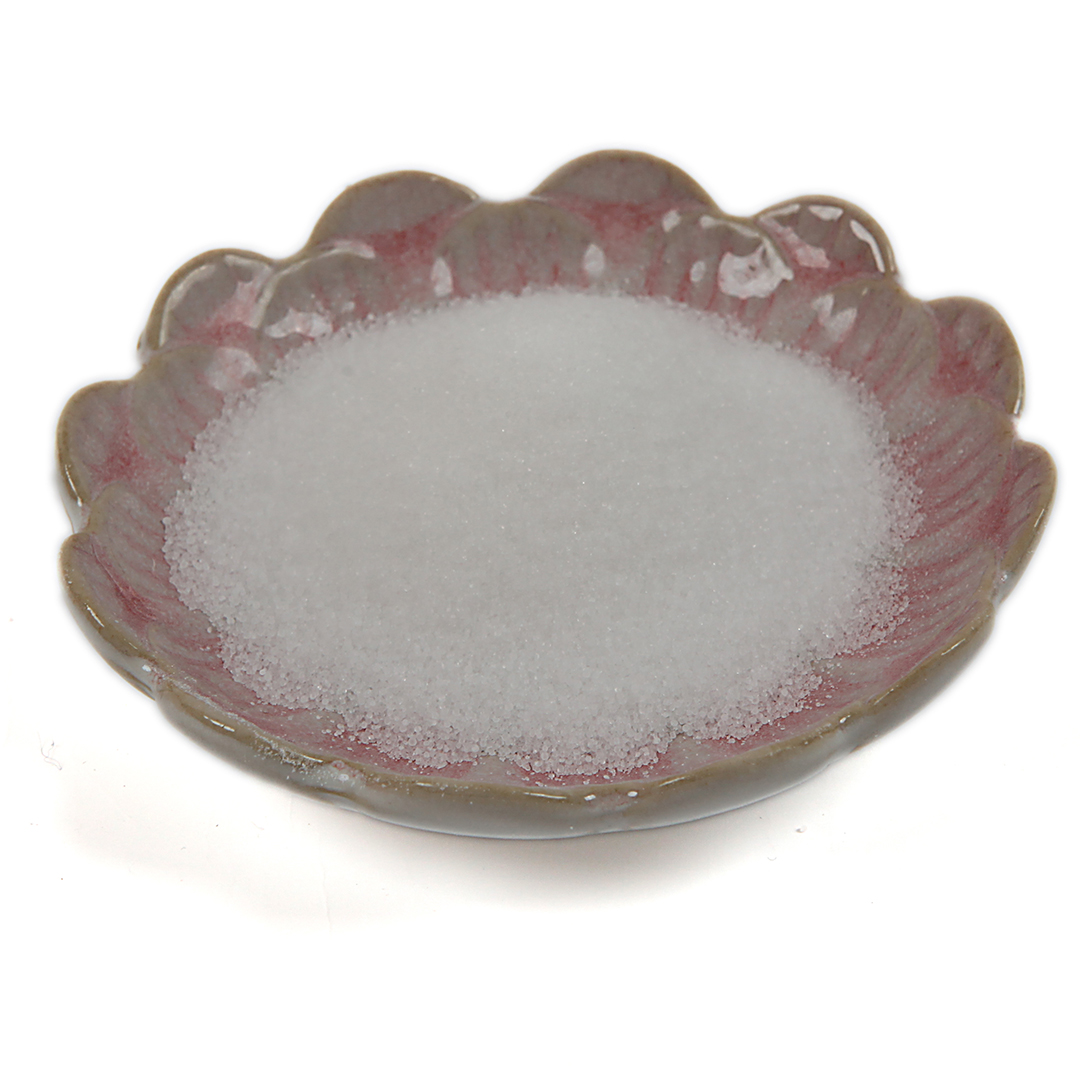
Product name: 4,4'-(4,4'-Isopropylidenediphenoxy)diphthalic Anhydride (BPADA)
Synonyms: ULTEM DIANHYDRIDE; 4,4'-Bisphenol A Dianhydride; 5,5'-[(1-methylethylidene)bis(4,1-phenyleneoxy)]bis-1,3-isobenzofurandione
Model designation: JM 38103-06-9 | CAS: 38103-06-9 | EINECS: 253-781-7
Molecular formula: C31H20O8 | Molecular weight: 520.49
Melting point: 184–187 °C (lit.) | Form and material: powder to crystal; white to slightly yellow crystalline powder
Documented use: key synthetic monomer for high-performance polyimide, 5G high-frequency and high-speed flexible copper-clad laminate, OLED flexible substrate, and aerospace lightweight composite materials
BPADA carries active anhydride groups and is extremely sensitive to moisture, with a ready hydrolysis ring-opening reaction that reduces or destroys polymerization activity. It must be stored in an absolutely dry, sealed environment, and the polymerization reaction is recommended under inert gas in an anhydrous polar solvent such as NMP or DMAc. That handling profile is the same profile the vinylbenzyl chloride isomers require, which is why these materials often travel together in a project scope. BPADA is also relevant to the advanced packaging dielectric discussion at the isomer-selection stage, because it belongs to the same dielectric material class as the packaging dielectrics the VBC monomers feed.
5-Methyl-1H-benzotriazole (5M-BTA) — CAS 136-85-6
Model designation: JM 136-85-6 | CAS: 136-85-6 | EINECS: 205-265-8
Molecular formula: C7H7N3 | Molecular weight: 133.15
Melting point: 80–82 °C (lit.) | Form and material: crystalline powder; white powder
Documented use: semiconductor electronic materials including copper and copper alloy corrosion inhibitors and anti-fading agents in photomasking resins; industrial circulating water treatment, rust preventive oil additives, and advanced lubrication systems
5M-BTA appears in the same project conversation because photomasking resin formulations and copper-interconnect cleaning steps consume benzotriazole-family chemistry alongside the photoresist monomers. NIST WebBook records 5-Methylbenzotriazole (CAS 136-85-6) as a corrosion inhibitor for non-ferrous metals used in electronic-grade formulations for semiconductor cleaning.
Step-by-Step: Matching an Isomer to a Project
The sequence below is built so that each step can be closed with a document rather than an assumption. Steps one through four should be complete before a sample is requested; steps five through seven govern the path from sample to industrial scale.
Step 1 — Fix the isomer against its CAS number
Write the CAS number into the requisition, not just the product name. Confirm that 4-Vinylbenzyl chloride is quoted as CAS 1592-20-7, that 1-(chloromethyl)-2-vinylbenzene is quoted as CAS 22570-84-9, that 3-(Chloromethyl)styrene is quoted as CAS 39833-65-3, and that Vinylbenzyl chloride mixed grade is quoted as CAS 30030-25-2. Cross-check the EINECS entry as a second identifier: 216-471-2, 245-092-5, 254-649-1, and 250-005-9 respectively.
Step 2 — Confirm the stabilizer or inhibitor system
For 3-(Chloromethyl)styrene, confirm approximately 0.1% TBC. For the mixed grade, confirm the 50–100 ppm tert-butylcatechol inhibitor range. For the 4- and 2-isomers, confirm what the supplier declares, and record it, because the product data does not fix a number for those two grades. Then check that the declared loading is compatible with the inhibitor balance already set in your formulation.
Step 3 — Set the purity and metal-ion control target
Electronic-grade supply in this family is defined less by the assay number than by the metal impurity ceiling. Jumingchem states ppb-level metal ion impurity purification capability for electronic-grade products, with purification at ≤10 ppb meeting SEMI Grade 4+ standards, and operates GMP clean workshops classified as ISO Class 6. The production chain is fully sealed and temperature-controlled under an ISO9001 quality management system, with batch traceability, retained samples, and support for third-party re-inspection through SGS, BV, and Intertek. If your project needs that level of documentation, request it explicitly rather than assuming it is bundled into the grade name.
Step 4 — Match the storage and handling window
Fixed constants matter here. 4-Vinylbenzyl chloride is recommended for storage at 2–8 °C. The mixed Vinylbenzyl chloride grade is recommended for storage at −20 °C. 3-(Chloromethyl)styrene is supplied as a light yellow to colorless liquid. Confirm that the receiving site can hold the required temperature, that packaging materials are compatible, and that the feed system excludes moisture. Jumingchem's recommended practice for the downstream reaction is batch operation under inert-gas protection, closed-system feeding and handling, precise temperature control, and formulation and filtration of high-purity chemicals in clean environments, with low-extraction materials such as 316L VIM/VAR stainless steel and PFA/PVDF used to prevent contamination.
Step 5 — Match the isomer to the application
All four CAS numbers are documented for the same downstream family, so the application match is made on the isomer, the stabilizer loading, the storage window, and the recorded constants rather than on a documented performance hierarchy. Use the application section below to make that mapping explicit for your team.
Step 6 — Validate at sample scale before scale-up
Sample validation is where the isomer decision is proved. Confirm the lot-level isomer ratio for the mixed grade, confirm measured density and boiling point for the 2-isomer where the data record is marked as predicted, and confirm the stabilizer loading analytically against the certificate of analysis.
Step 7 — Lock traceability and the scale-up path
Batch traceability, retained samples, and third-party re-inspection belong in the supply agreement, not in an email thread. On the production side, the capability to move from gram-level R&D to hundred-ton industrial production matters because it removes a supplier change between the qualification batch and the commercial batch. Jumingchem operates multiple production bases across China with a total annual capacity of 60,000 tons and offers that flexible production range from gram-level R&D to hundred-ton industrial production, supported by advanced microchannel and continuous flow technology for highly challenging chemical processes.
Application Use Cases
Negative photoresist resins
Negative photoresist resin synthesis is the most frequently cited application for the vinylbenzyl chloride family. All four CAS numbers are documented as core monomers for high-performance negative photoresist resins. In a project meeting, the practical question is which isomer source the resin chemistry was built around, and whether the supplier can deliver that CAS number consistently at electronic grade with the declared inhibitor system.
E-beam photoresist
E-beam electron beam photoresist appears in the product documentation as a specific example within the negative photoresist resin family. Because E-beam lithography sits closer to the leading edge of the process, the monomer specification tends to be tighter and the metal-ion ceiling more consequential. This is the application where the ≤10 ppb purification figure and the ISO Class 6 cleanroom environment become evaluation criteria rather than background detail.
Homogeneous ion-exchange membranes
Homogeneous ion-exchange membranes are listed across all four grade records. The functional logic is straightforward: the chloromethyl group is the site that carries the ion-exchange function, and the vinyl group is what anchors the monomer into the polymer backbone. For membrane projects, the incoming isomer and inhibitor loading determine how much functionalization capacity the monomer actually delivers.
Ultra-pure water resins
Ultra-pure water resins appear in the same documented application set. Here the metal-ion control target in the raw monomer transfers directly into the finished resin specification, because there is no downstream purification step that removes a metal contaminant introduced at the monomer stage.
Chelating resins
Chelating resins complete the documented downstream list. The 4-isomer record specifically describes the grade as a component of ion-exchange resins and identifies dual functionality with ready derivatization by chloride displacement, which is the property that supports ligand attachment after polymerization.
Advanced packaging dielectric materials
Advanced packaging dielectric materials are listed across the vinylbenzyl chloride records and connect this product family to the polyimide side of the project scope. BPADA, the dianhydride monomer recorded for high-performance polyimide, has published application in semiconductor packaging and flexible circuits. Because BPADA and the VBC isomers share a moisture-sensitive handling profile and the same inert-gas, anhydrous-polar-solvent reaction environment, packaging dielectric programs frequently qualify both material families together.
Comparison Table: Four Isomers Side by Side
| Parameter | 4-Vinylbenzyl chloride | 1-(chloromethyl)-2-vinylbenzene | 3-(Chloromethyl)styrene | Vinylbenzyl chloride (mixed) |
|---|---|---|---|---|
| CAS | 1592-20-7 | 22570-84-9 | 39833-65-3 | 30030-25-2 |
| EINECS | 216-471-2 | 245-092-5 | 254-649-1 | 250-005-9 |
| Molecular formula | C9H9Cl | C9H9Cl | C9H9Cl | C9H9Cl |
| Molecular weight | 152.62 | 152.62 | 152.62076 | 152.62 |
| Appearance | Colorless to pale yellow transparent liquid | Light yellow to colorless liquid | Light yellow to colorless liquid | Light yellow to colorless liquid |
| Density | 1.083 g/mL at 25 °C (lit.) | 1.066 ± 0.06 g/cm³ (Predicted) | — | 1.074 g/mL at 25 °C (lit.) |
| Boiling point | 229 °C (lit.) | 223.4 ± 9.0 °C (Predicted) | — | 229 °C (lit.) |
| Flash point | 221 °F | — | — | 221 °F |
| Storage | 2–8 °C | — | — | −20 °C |
| Stabilizer / inhibitor | — | — | Approximately 0.1% TBC | 50–100 ppm tert-butylcatechol |
| Isomer identity | Para isomer | Ortho isomer | Meta isomer | Mixture of 3- and 4-isomers |
| Documented downstream use | Core monomer for negative photoresist resins including E-beam photoresist, advanced packaging dielectric materials, homogeneous ion-exchange membranes, ultra-pure water resins, and chelating resins — identical application set across all four CAS numbers | |||
An em dash indicates that the supplied product data does not specify a value for that field. No ranking is implied by the ordering of the columns, and no performance hierarchy between the isomers is documented in the source data.
Reading the table: the only three columns that carry a documented stabilizer statement or a documented storage window are the 4-isomer and the mixed grade for storage, and the meta isomer and the mixed grade for inhibitor loading. Those are the fields to press on first in a supplier questionnaire.
Selection Checklist for Project Teams
- Is the CAS number written into the requisition, with the EINECS entry as a cross-check?
- Is the stabilizer or inhibitor loading stated as a numeric range, and matched against the formulation balance?
- Is the metal-ion ceiling defined in ppb, and is SEMI grade referenced explicitly?
- Is the storage temperature achievable at the receiving site — 2–8 °C, −20 °C, or ambient with inert gas blanketing?
- Are wetted materials specified as low-extraction, such as 316L VIM/VAR stainless steel and PFA/PVDF?
- Is the isomer ratio of the mixed grade confirmed per lot rather than assumed from the grade name?
- Is batch traceability, retained sampling, and third-party re-inspection written into the agreement?
- Is the scale-up path from qualification batch to commercial batch handled by the same supplier and the same production route?
Frequently Asked Questions
What is the difference between the four electronic-grade vinylbenzyl chloride CAS numbers?
They are four distinct registered products with the same molecular formula, C9H9Cl, and a molecular weight of approximately 152.62. 4-Vinylbenzyl chloride is CAS 1592-20-7 with EINECS 216-471-2. 2-Vinylbenzyl chloride, also named 1-(chloromethyl)-2-vinylbenzene, is CAS 22570-84-9 with EINECS 245-092-5. 3-(Chloromethyl)styrene, also named 1-(chloromethyl)-3-vinylbenzene, is CAS 39833-65-3 with EINECS 254-649-1. Vinylbenzyl chloride is CAS 30030-25-2 with EINECS 250-005-9, and it is supplied as a mixture of the 3- and 4-isomers containing 50–100 ppm tert-butylcatechol as inhibitor. All four are documented for the same downstream application set, so the selection decision rests on the isomer, the stabilizer system, and the recorded physical constants.
Which isomer should be specified for a negative photoresist or E-beam photoresist project?
All four CAS numbers are documented as core monomers for high-performance negative photoresist resins, including E-beam electron beam photoresist, and for advanced packaging dielectric materials. The source data does not establish a performance ranking between them. The practical specification decision therefore comes down to which isomer the formulation was written against, what stabilizer loading the formulation already accounts for, and whether the receiving site can hold the documented storage window — 2–8 °C for 4-Vinylbenzyl chloride or −20 °C for the mixed Vinylbenzyl chloride grade.
What purity and metal-ion specifications should be requested for electronic-grade supply?
Electronic-grade in this family is governed mainly by metal impurity limits rather than by a headline assay figure. Jumingchem states ppb-level metal ion impurity purification capability for electronic-grade products, with purification at ≤10 ppb meeting SEMI Grade 4+ standards, and operates GMP clean workshops classified as ISO Class 6. Operations use low-extraction wetted materials such as 316L VIM/VAR stainless steel and PFA/PVDF to prevent contamination, under an ISO9001 quality management system with batch traceability and retained samples. Buyers should request the ppb ceiling, the cleanroom class, and the inspection method as separate line items in the specification.
Can the isomer ratio or product grade be customized for a development project?
Yes. Jumingchem offers custom o/m/p isomer ratio VBC products against a client's specific formulation needs, covering the path from sample development to scale-up production, together with R&D collaboration for polymer material companies. The company also runs CDMO process development projects from lab route optimization to industrial scale-up, including microchannel continuous flow process transfer, and joint development work on new applications such as 5G polyimide materials. Production scale ranges from gram-level R&D to hundred-ton industrial production against a total annual capacity of 60,000 tons.
How do sample validation and lead time work before a commercial order?
Sample validation is the point at which the isomer decision is proved rather than assumed. Confirm the lot-level isomer ratio for the mixed grade, confirm measured values where the data record is marked as predicted, and confirm the declared stabilizer loading against the certificate of analysis. Typical supply structures in this family separate industrial-grade bulk contracts, which commonly run at 5–50 tons per shipment for monthly or quarterly fixed-quantity schedules, from high-purity electronic-grade supply, which typically runs at 500 kg to 5 tons per batch with ppb-level metal impurity control and full traceability. To start a validation batch or request a quotation, contact the Jumingchem team at en.jmchemchina.com or sales@jumingchem.com.
Conclusion
The vinylbenzyl chloride name covers four CAS-registered electronic-grade materials that share a molecular formula, a molecular weight, and a documented downstream application set, and that differ in isomer identity, stabilizer system, storage window, and the completeness of their recorded physical constants. That structure makes the selection problem tractable but not trivial: the match is decided by the isomer the formulation was built around, the inhibitor loading the formulation already accounts for, and the handling window the receiving site can actually hold.
Work the sequence in order. Fix the CAS number first, confirm the stabilizer or inhibitor loading second, set the metal-ion ceiling third, and only then move to sample validation and scale-up. Projects that invert that order tend to discover the isomer mismatch at the qualification batch, when the cost of correcting it is highest.
Request a Sample or Quotation
Jiangsu Juming Chemical Technology Co., Ltd. supplies electronic-grade vinylbenzyl chloride isomers, 5-Methyl-1H-benzotriazole, and BPADA from ISO9001-certified production with ppb-level purification capability and full batch traceability.
- Sample and validation batch requests: sales@jumingchem.com
- WhatsApp / Phone: +86 159 6162 4309
- Product range and technical documentation: en.jmchemchina.com
- Full product catalogue (PDF): Jiangsu Juming catalogue
Have Questions or Need More Details?
Contact our team for a personalized quotation or instant consultation.
Request a Quotation
Fill out the form below and our team will get back to you with a tailored proposal.
WhatsApp Direct Chat
Prefer to chat in real-time? Message us on WhatsApp for instant assistance & quick answers.
- Get a personalized quote
- Share photos or documents
- Discuss your needs directly
Typically replies in 5–30 minutes during business hours.