BPADA vs. Alternative Dianhydrides for Transparent Polyimide Films: A Head-to-Head Decision
An evaluation-stage selection guide for engineers and procurement teams buying electronic-grade polyimide anhydride monomers.
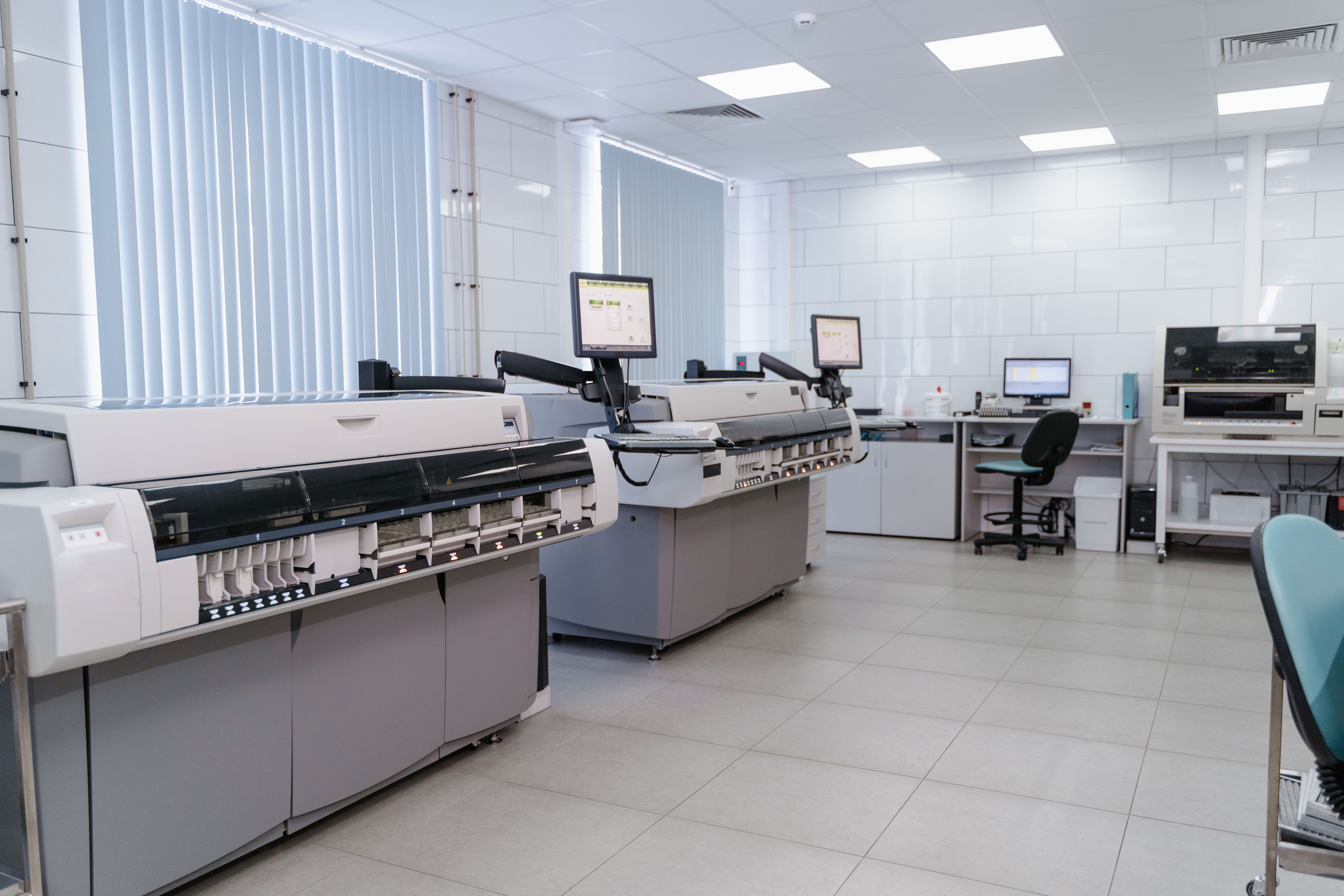
R&D center: dianhydride screening and electronic-grade purity verification behind transparent polyimide film projects.
BPADA — 4,4'-(4,4'-isopropylidenediphenoxy)bis(phthalic anhydride), CAS 38103-06-9 — is the dianhydride that most transparent-polyimide programmes end up benchmarking everything else against. Its central isopropylidene bridge and its two aryl-ether linkages place rotational freedom in the polymer backbone, and that flexibility is the structural reason polyimide films synthesized from this molecule have high optical transparency. BPADA is used as a key synthetic monomer for high-performance polyimide (PI), 5G high-frequency and high-speed flexible copper-clad laminate (FCCL), OLED flexible substrates and aerospace lightweight composite materials.
This article is a head-to-head decision, not a product page. It sets BPADA against the dianhydride classes normally evaluated alongside it, keeps BPADA's verified property data in front of the reader, and marks the alternative-side statements for what they are: structural design reasoning, not measured competitor data. It also states where BPADA is the wrong answer — because a specification that ignores the trade-off is not a specification.
The Problem: The Dianhydride, Not the Diamine, Usually Decides Film Colour
Aromatic polyimides are coloured for a well-understood reason. Electron-rich diamine units and electron-poor dianhydride units pair up along and between chains to form charge-transfer complexes, and the absorption tail of those complexes reaches into the visible region. A fully rigid, planar backbone packs tightly, strengthens that interaction, and produces the familiar amber tone. When a display stack, an optical film or a high-frequency laminate needs transmission rather than colour, the chemistry has to be disturbed deliberately.
The dianhydride is the practical lever for that disturbance, because it sits at the electron-poor end of every repeat unit and because its geometry governs how well neighbouring chains can stack. Two structural features matter most in practice: backbone flexibility (linkages that rotate instead of locking the chain into a plane) and the presence of bulky side groups or bridging units that keep chains apart. BPADA carries both features in one molecule, which is why it appears so often in transparent-film discussions.
At the same time, flexibility is not free. A softer backbone generally trades away some of the stiffness that supports the highest glass-transition temperatures and the lowest coefficients of thermal expansion. That trade-off is exactly what makes this a head-to-head decision rather than a one-line recommendation, and it produces the four criteria that should drive the evaluation:
- Optical performance: target transmission at the actual film thickness and wavelength band in use, not a generic “colourless” claim.
- Thermal envelope: the glass-transition temperature and dimensional stability the downstream process actually requires.
- Electrical performance: dielectric behaviour at the operating frequency for high-speed and high-frequency work.
- Purity and supply: metal-ion and particle cleanliness, grade documentation, minimum order quantity, lead time and continuity.
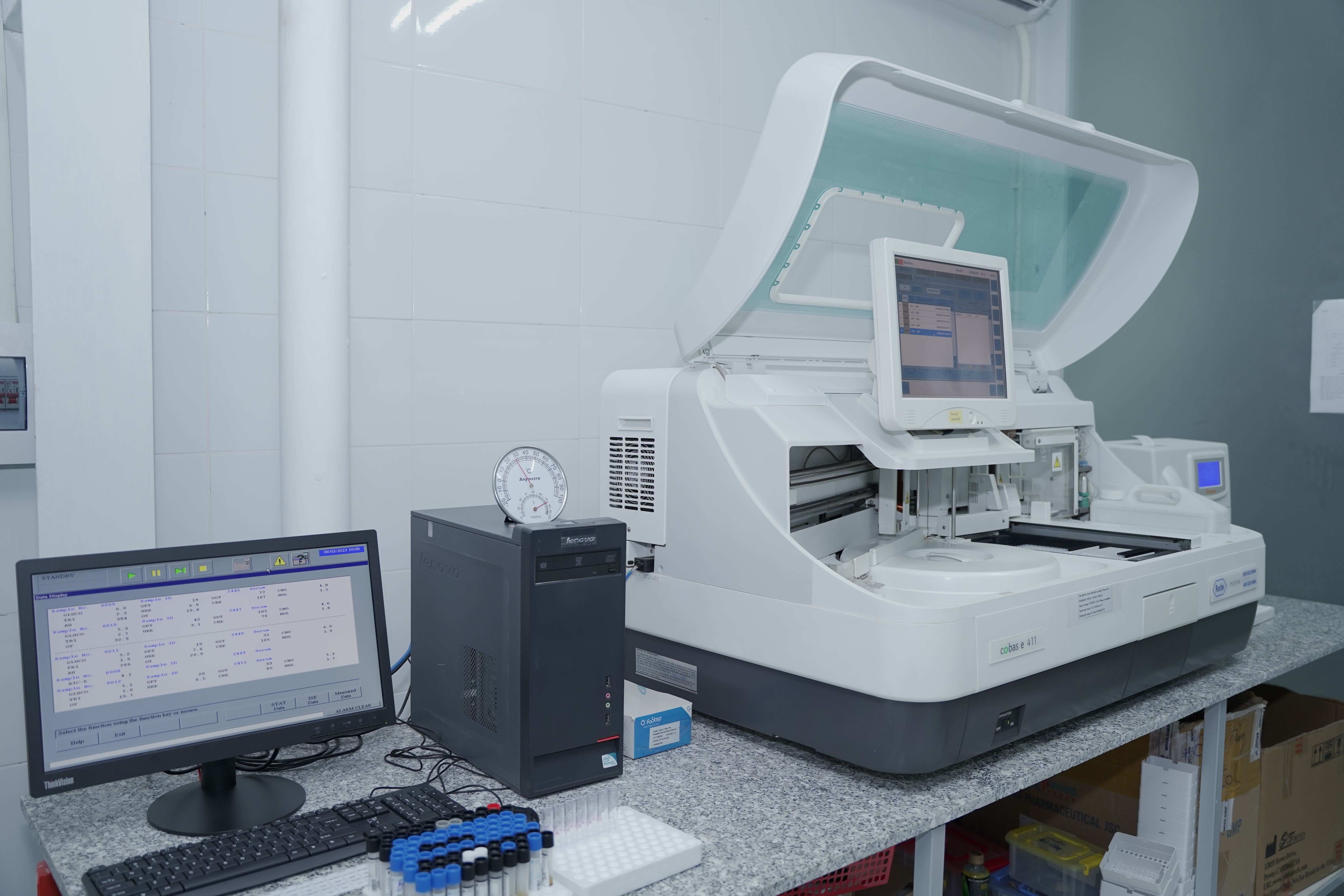
Formulation screening: flexibility, purity grade and film transparency are assessed together, not in isolation.
Industry Background: Why the Transparency Question Is Being Asked More Often
The demand context is measurable. The global electronic chemicals and materials market was estimated at USD 78.5 billion in 2025, and Asia Pacific accounted for 66.6% of that market revenue in the same year (Grand View Research). Separately, global semiconductor materials revenue reached USD 73.2 billion in 2025 (SEMI). Within that space, the electronic-grade photoresist market alone was estimated at USD 4.96 billion in 2024 (Grand View Research). Note that published market sizes for electronic chemicals vary with scope — some analysts exclude substrate-linked materials or ancillary chemicals such as developers and strippers — so figures should be treated as directional rather than exact.
Two application trends pull dianhydride selection toward the transparency side of the trade-off. First, flexible and foldable display construction needs a substrate or cover layer that is both thermally durable and optically clear, which is why BPADA is used in the production of polyimide films for flexible display substrates. Second, high-frequency and high-speed flexible copper-clad laminate and advanced packaging dielectric layers need low-loss dielectrics with stable dimensions, which is why BPADA is described as a key monomer for high-performance polyimides used in semiconductor packaging and flexible circuits.
Against that backdrop, the practical question for a buyer in the evaluation stage is rarely “which dianhydride is best?” It is “which dianhydride class fits this optical target, this thermal envelope and this quality grade — and can it be supplied repeatably?”
Detailed Solution: What BPADA Actually Brings to a Transparent Film
Verified property profile
The numbers below come from the product specification and are the reference values a film engineer works with when comparing BPADA against an alternative dianhydride.
| Property | Verified value for BPADA |
|---|---|
| Product name | 4,4'-(4,4'-Isopropylidenediphenoxy)diphthalic anhydride |
| CAS | 38103-06-9 |
| Molecular formula | C31H20O8 |
| Molecular weight | 520.49 g/mol |
| Melting point | 184–187 °C (lit.) |
| Density | 1.406 ± 0.06 g/cm³ (predicted) |
| Boiling point / vapour pressure | 712.3 ± 60.0 °C (predicted) / 0 Pa at 25 °C |
| EINECS | 253-781-7 |
| Form and colour | White to slightly yellow crystalline powder |
| Primary applications | Key synthetic monomer for high-performance polyimide (PI), 5G high-frequency and high-speed FCCL, OLED flexible substrate, aerospace lightweight composite materials |
Why the flexible backbone produces transparency
Read the name carefully and the mechanism is visible. The molecule is built from two phthalic anhydride end groups connected through a bisphenol-A-type isopropylidene unit by way of ether linkages. Both of those connecting features are flexible: the isopropylidene group provides a tetrahedral kink, and the ether bridges allow rotation about the aryl–oxygen bonds. The result is a dianhydride that does not force neighbouring chains into tight, coplanar stacks.
Looser packing does two useful things for an optical film. It weakens the interchain charge-transfer interaction that generates visible-light absorption, and it increases free volume, which interrupts the extended conjugation that would otherwise shift absorption toward the visible band. The verified outcome stated in the product literature is direct: polyimide films synthesized from this molecule have high optical transparency. The same family of properties is why BPADA-based chemistry is used in OLED flexible substrates and in flexible display substrate films, where clarity and thermal durability have to coexist.
Processability improves in parallel. The same backbone flexibility that helps optics also helps solubility in polar aprotic media. Dimethyl sulfoxide, for example, is used as a solvent for the synthesis of polyamide, polyimide and polysulfone resins — a relevant point when a project is choosing between a solvent-cast route and a melt or imidization route, and a reason why the monomer and the process solvent should be qualified together rather than separately.
What “electronic grade” adds to the optical result
A high-transparency film is not delivered by backbone chemistry alone. Metal residues and particulates scatter light, seed defects and destabilise dielectric performance, so the grade of the monomer is part of the optical specification. Electronic-grade supply from Jiangsu Juming Chemical Technology Co., Ltd. (Jumingchem) is characterised by metal impurity levels below 10 ppb, with industrial grade, high purity grade and electronic grade available across the portfolio, and 100% testing applied to all products. Metal impurity specifications can be customised to the customer's own limits for elements such as sodium, iron and copper.
Jumingchem, established in 2017 and based in Jiangyin, Wuxi City, Jiangsu, China, integrates R&D, production and sales, with a total factory area of 78,000 m², a 3,000 m² R&D center, a 300 m² pilot plant and a 600 m² GMP workshop. Annual output is 60,000 tons, with 180 employees and a 25-engineer R&D team; roughly 70% of output is exported to markets including the USA, Korea, Japan, Taiwan region, Germany, Southeast Asia and the Middle East. BPADA is supplied under model reference JM 38103-06-9.
Two quality outcomes from the case record are relevant to film and display work. An OLED material supplier running BPADA-related development achieved metal impurities below 20 ppb with particle control of ≤0.1 μm, and reported a 3% yield improvement in OLED panel production. A leading international photoresist formulation developer has taken ArF photoresist monomer at an annual supply of 5 tons, while a European fine-chemical distributor has maintained four consecutive years of stable cooperation with a 100% repurchase rate.
Where BPADA is not the right answer
Honesty here saves a project. BPADA's flexibility is bought at a cost: when a specification is driven by the highest achievable glass-transition temperature, the lowest coefficient of thermal expansion or the greatest solvent resistance, the more rigid aromatic dianhydride classes usually remain in contention, and a fluorinated aromatic dianhydride may be considered where a different balance of dielectric behaviour, moisture uptake and optical performance is needed. In those cases BPADA is better treated as a benchmark to compare against than as the default. A head-to-head evaluation should therefore start from the requirement that is hardest to satisfy, not from the monomer that is easiest to source.
Step-by-Step: Running the Head-to-Head Evaluation
Step 1 — Fix the optical target first
Define transmission at the working thickness and wavelength band before any monomer is discussed. A film that reads clear at one thickness can read coloured at another, and colour specifications written without thickness are not testable.
Step 2 — Freeze the thermal and dimensional envelope
Record the process temperatures, the required dimensional stability and the coefficient of thermal expansion that the downstream stack can tolerate. This step determines how much backbone rigidity is actually necessary, and therefore how much of the transparency budget can be spent.
Step 3 — Screen the dianhydride on backbone architecture
Place BPADA (isopropylidene-bridged, ether-linked, flexible) against rigid-rod aromatic dianhydride classes and fluorine-containing classes. Keep the comparison at the level of architecture and consequence until supplier data supports something more precise, and resist forcing competitors into a numeric table that their own data does not support.
Step 4 — Confirm grade, not just chemistry
Request the metal-ion specification and the test method. Electronic grade is defined by metal impurities below 10 ppb in this portfolio, and custom limits can be written into the specification. Also confirm that 100% testing is applied and that batch-level results — not only typical values — are reported.
Step 5 — Validate on a sample before committing volume
Pre-shipment sample confirmation is available, with a minimum order quantity of 1 kg, so a film trial can be run before commercial volume is ordered. For customised routes, first validation sample delivery has been completed within two weeks after process optimisation. Sample data, not literature, should decide the final selection.
Step 6 — Lock supply and documentation together
Standard lead time is 7–30 days, monthly capacity is 5,000 tons, and a 72-hour emergency order response mechanism supports supply continuity. Documentation and labelling are configurable: COA with customer-specified test items and format, MSDS in English or other languages, custom labels, third-party test reports through SGS, BV or Intertek, batch traceability coding, and UN-certified dangerous goods packaging on request. Bulk regular supply can be structured on monthly or quarterly fixed-quantity contracts, and remote technical support is available after delivery.
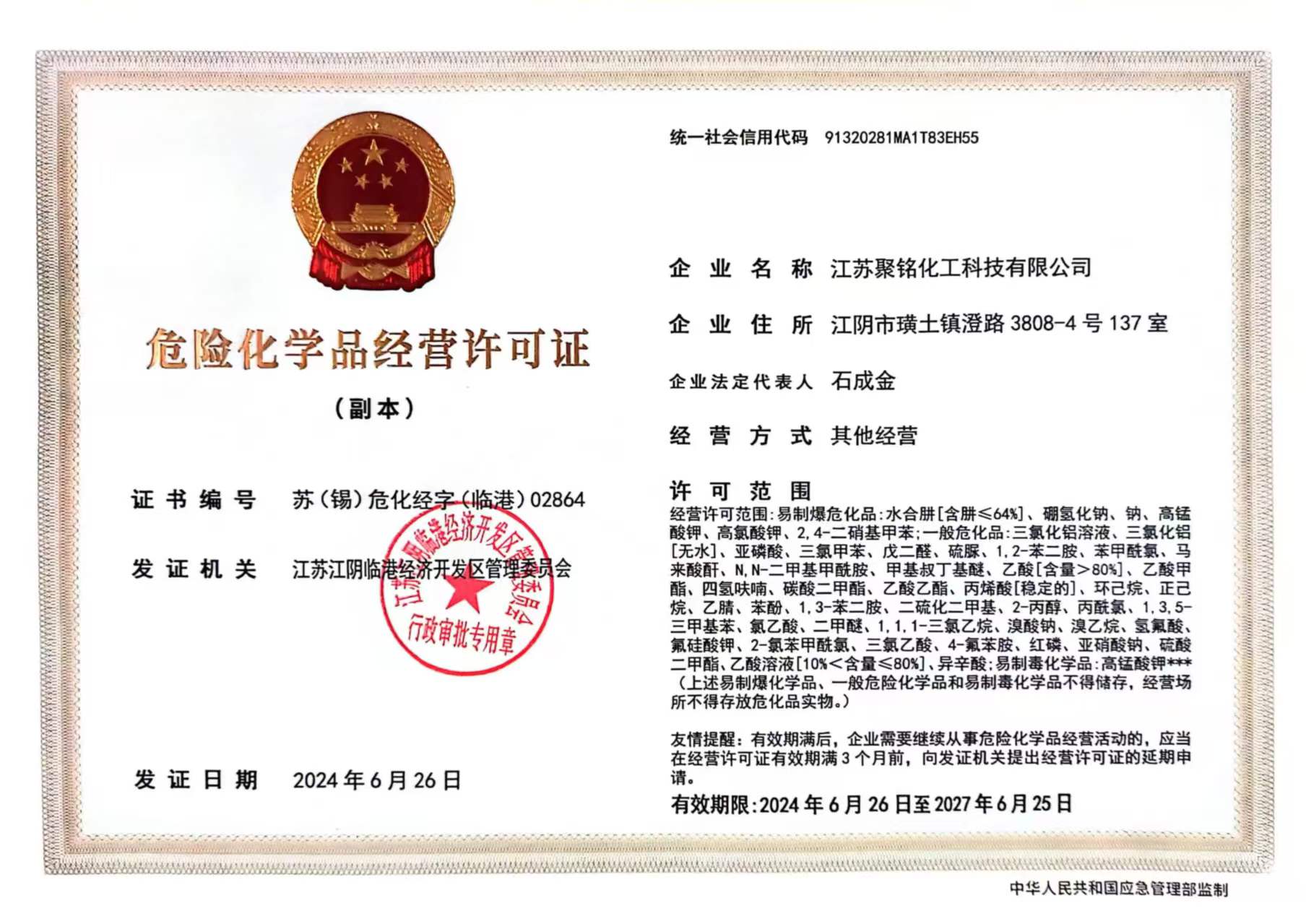
Compliance proof: Hazardous Chemicals Operation License, certificate number Su(Xi)WHJJZ(Lingang)02864, issued 2024-06-26, valid to 2027-06-25.
Use Cases: Where BPADA Earns the Slot
- OLED flexible substrates. BPADA is applied in OLED flexible substrate materials, where the film must survive display processing temperatures while remaining optically clear.
- Flexible display substrate films. The monomer is a precursor for polyimide synthesis and is used in the production of polyimide films for flexible display substrates.
- 5G high-frequency and high-speed FCCL. BPADA serves as a key monomer for 5G high-frequency and high-speed flexible copper-clad laminate, where dielectric stability and dimensional control matter alongside film quality.
- Advanced packaging and flexible circuits. Electronic-grade BPADA is a key monomer for high-performance polyimides used in semiconductor packaging and flexible circuits.
- Aerospace lightweight composites. The same monomer family is used in aerospace lightweight composite materials, where thermal durability is the primary driver.
- Joint development programmes. BPADA is used in collaborative new-material projects targeting 5G polyimide materials and EUV photoresist monomers, with electronic-grade supply and ppb-level metal impurity control.
These projects rarely stop at one material. A photoresist or polyimide line typically also qualifies 4-Vinylbenzyl chloride (CAS 1592-20-7) and the 1-(chloromethyl)-2-vinylbenzene (CAS 22570-84-9) and 1-(chloromethyl)-3-vinylbenzene (CAS 39833-65-3) isomers as core monomers for negative photoresist resins, electronic-grade 5-Methyl-1H-benzotriazole (CAS 136-85-6) as a copper and copper alloy corrosion inhibitor and anti-fading agent in photomasking resins, and a polyimide synthesis solvent such as dimethyl sulfoxide. Sourcing them from one qualified supplier reduces the number of separate purity audits a buyer has to run.
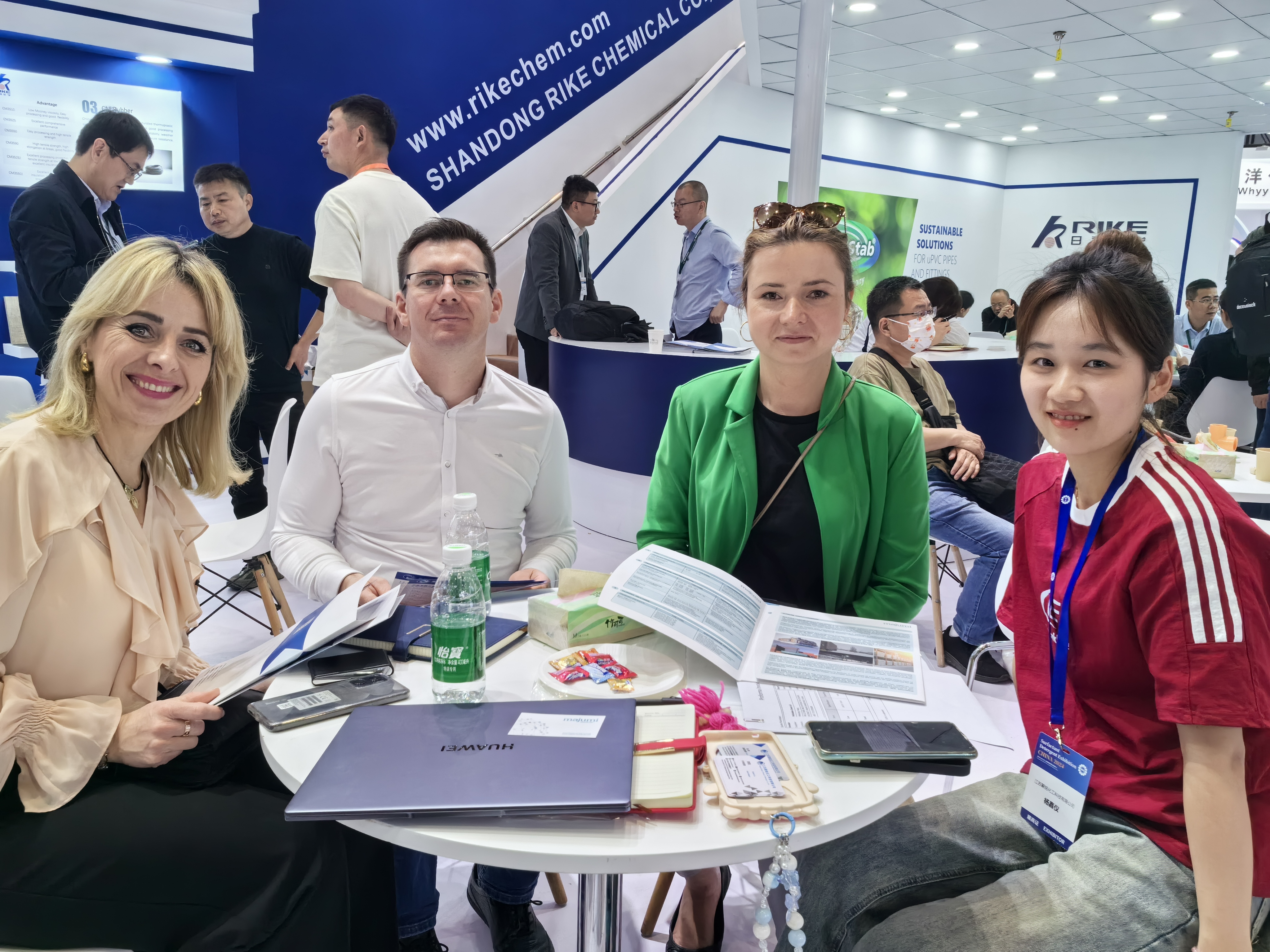
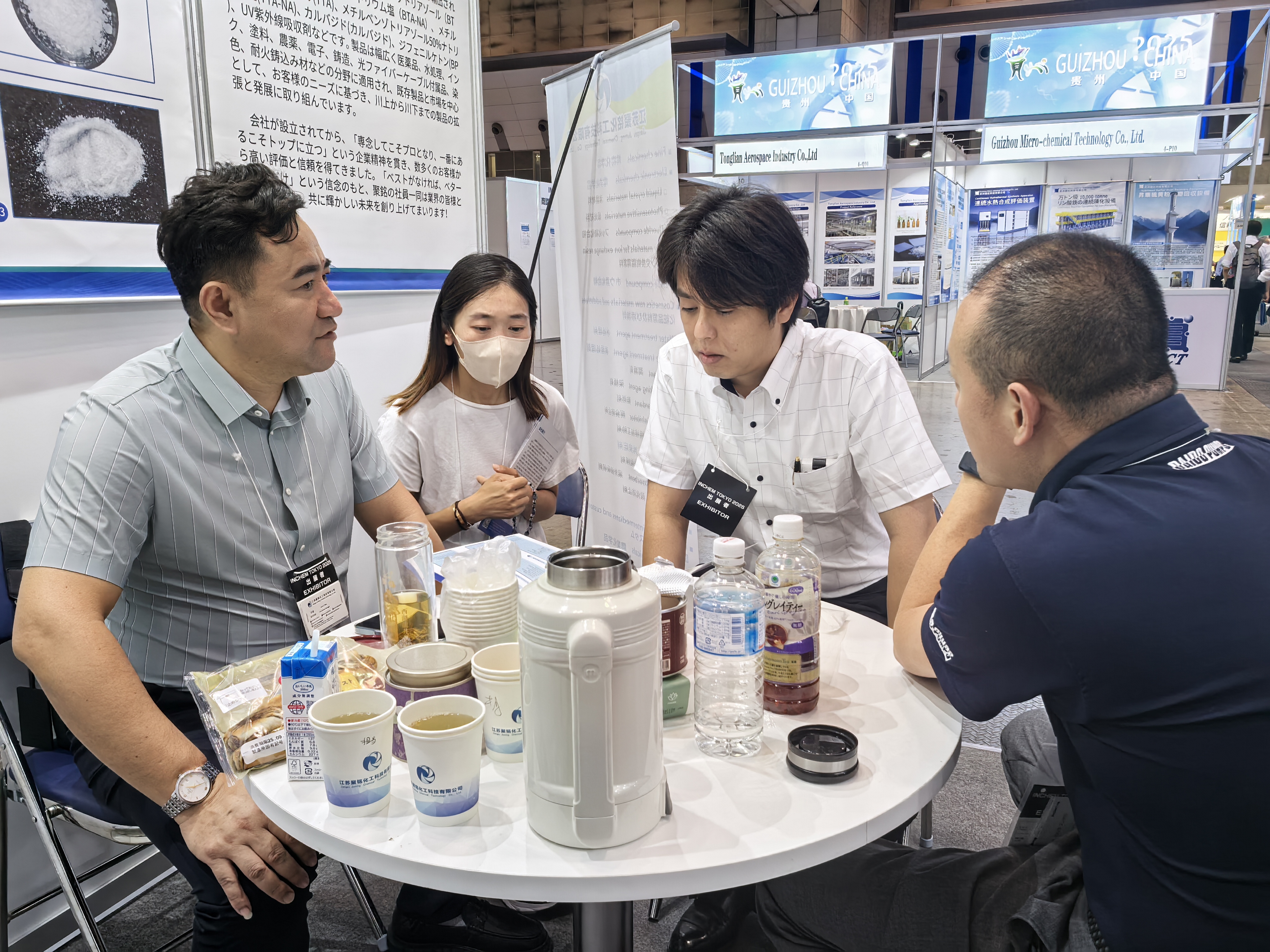
Client engagement: electronic-grade monomer and dianhydride discussions with overseas buyers at industry exhibitions.
Comparison Tables
Table 1 uses verified values only. Table 2 is a decision framework: the BPADA column reflects verified properties and product facts, while the alternative-dianhydride column is intentionally qualitative, because attributing precise numbers to unnamed competitor classes would not be defensible.
| Verified BPADA data point | Value | Why it matters in a transparent-film decision |
|---|---|---|
| Molecular weight | 520.49 g/mol | Sets stoichiometry and the mass balance used in formulation calculations |
| Melting point | 184–187 °C | Informs handling, drying and melt-processing windows |
| Density | 1.406 g/cm³ | Used for charge and volume calculations in production planning |
| Electronic-grade purity | Metal impurities below 10 ppb | Reduces light scattering and defect seeding in optical films |
| Quality control | 100% testing of all products | Batch-to-batch consistency, which is what film yield depends on |
| Decision dimension | BPADA | Alternative dianhydride classes (qualitative) |
|---|---|---|
| Backbone flexibility | Isopropylidene bridge plus two aryl-ether linkages; flexible by design | Rigid-rod aromatic classes lock the chain into a more planar geometry |
| Optical transparency | Polyimide films synthesized from this molecule have high optical transparency | Highly rigid or strongly interacting backbones generally favour higher thermal performance but tend to show more visible colour |
| Typical target application | OLED flexible substrate, 5G high-frequency FCCL, flexible display film, aerospace composites | Applications where maximum rigidity, solvent resistance or a different dielectric balance is prioritised |
| Processability | Flexible backbone supports solubility in polar aprotic solvents such as DMSO, which is used for polyimide resin synthesis | More rigid classes typically demand more demanding process conditions; verify experimentally |
| Purity control | Electronic grade with metal impurities below 10 ppb; customisable metal-ion limits; 100% testing | Grade definitions and reporting practices vary by supplier — audit the COA rather than the label |
| Commercial entry | MOQ 1 kg, lead time 7–30 days, 5,000 tons monthly capacity, quarterly or monthly fixed-quantity contracts | Confirm MOQ and lead time per supplier; these often decide pilot timelines more than price does |
| Cost structure | Microchannel continuous-flow production is documented at approximately 25% lower raw material cost, 46% less solid waste and 68% shorter production time versus conventional alternatives | Compare on total cost of qualification, not unit price alone |
FAQ
What compliance documentation comes with electronic-grade BPADA?
Jiangsu Juming Chemical Technology Co., Ltd. operates under an ISO 9001 quality management system (certificate NOA2505548, issued 2025-07-25, valid to 2028-07-24) and holds a Hazardous Chemicals Operation License (Su(Xi)WHJJZ(Lingang)02864, issued 2024-06-26, valid to 2027-06-25) as well as a Non-pharmaceutical Precursor Chemicals Filing Certificate ((Su) 3J32028100536, issued 2025-02-17, valid to 2028-02-16). Product-level documentation is configurable: COA with customer-specified test items and format, MSDS in English or other languages, custom label design, third-party test reports issued through SGS, BV or Intertek, and batch traceability coding. Complete export documentation supports customs clearance, and temperature-controlled packaging is available for long-distance hot-climate shipping.
Can the purity grade and metal-ion limits be customised?
Yes. Three purity grades are supplied — industrial, high purity and electronic grade — with electronic grade characterised by metal impurities below 10 ppb. Metal impurity indicators and specifications can be customised, for example around sodium, iron and copper limits, and 100% testing is applied across all products. Beyond purity, customisation extends to molecular structure and synthesis route design, packaging from 1 kg to tons, and blend or formulation services, within a full-chain CDMO model that runs from process R&D through pilot scale-up to commercial production.
How should budget be framed when comparing BPADA with alternatives?
Frame it as qualification cost rather than unit price. Documented figures for the microchannel continuous-flow production route indicate approximately 25% lower raw material costs, 46% less solid waste and 68% shorter production time relative to conventional alternatives, and in-house microchannel reactor manufacturing lowers equipment procurement and maintenance costs. On the receiving side, cost is driven by how many sample iterations a film trial needs, how much documentation has to be re-issued, and how much inventory has to be held while a new grade is validated — which is why early sample confirmation and customisable COA formats usually reduce total cost more than a marginal price difference does.
What sample quantity and validation support is available before scale-up?
The minimum order quantity is 1 kg, which allows a practical film or formulation trial before commercial volume is committed. Pre-shipment sample confirmation is part of the standard workflow, and for customised projects first validation sample delivery has been completed within two weeks after process optimisation. In one OLED-related case, a client achieved metal impurities below 20 ppb with particle control of ≤0.1 μm and reported a 3% yield improvement in OLED panel production; a manufacturer that replaced imported supply reported roughly 25% cost reduction and a delivery lead time shortened from 8 weeks to 4 weeks.
What lead time and supply continuity should a buyer expect?
Standard lead time is 7–30 days, supported by a 5,000 tons monthly capacity and an annual output of 60,000 tons across the company's production bases. A 72-hour emergency order response mechanism exists for supply-chain disruptions, and bulk regular supply projects can be arranged on monthly or quarterly fixed-quantity contracts. Remote technical support is provided after delivery. If you are evaluating BPADA for a transparent polyimide film project, the practical next step is a sample request with your target transmission, thickness and metal-ion specification so the grade and packaging can be quoted against your actual process window — contact sales@jumingchem.com or use the enquiry channel on en.jmchemchina.com.
Conclusion: Decide by Requirement, Not by Habit
BPADA wins the transparency-led comparison for one structural reason: the isopropylidene bridge and the two aryl-ether linkages give the polymer backbone enough rotational freedom to break up the tight chain packing and charge-transfer interactions that colour conventional aromatic polyimides. That is why films synthesized from this molecule show high optical transparency, and why the monomer underpins OLED flexible substrates, flexible display films, 5G high-frequency and high-speed FCCL and advanced packaging dielectrics. Verified values make it workable in practice: molecular weight 520.49 g/mol, melting point 184–187 °C, density 1.406 g/cm³, electronic-grade metal impurities below 10 ppb, and 100% testing.
The alternative dianhydride classes are not beaten everywhere. When the specification is dominated by maximum rigidity, the lowest coefficient of thermal expansion or the most aggressive solvent exposure, rigid-rod aromatic or fluorine-containing classes remain legitimate candidates, and BPADA is best used as the benchmark. The disciplined route is to fix the optical target and thermal envelope first, then compare architectures, then confirm grade and purity, then validate on a sample, and finally lock documentation and lead time into the contract.
Next step: request a BPADA sample, a quotation, or the full product catalogue for your polyimide film project.
Jiangsu Juming Chemical Technology Co., Ltd. (Jumingchem)
Electronic-grade BPADA (JM 38103-06-9) and a full electronic chemicals portfolio: 5-Methyl-1H-benzotriazole, 4-Vinylbenzyl chloride and its isomers, vinylbenzyl chloride, dimethyl sulfoxide, isopropyl alcohol and custom electronic-grade chemicals.
Website: https://en.jmchemchina.com/
Email: sales@jumingchem.com | WhatsApp: +86 159 6162 4309
Address: Jiangyin, Wuxi City, Jiangsu, China
Product catalogue (PDF): Download the Jiangsu Juming catalogue
Have Questions or Need More Details?
Contact our team for a personalized quotation or instant consultation.
Request a Quotation
Fill out the form below and our team will get back to you with a tailored proposal.
WhatsApp Direct Chat
Prefer to chat in real-time? Message us on WhatsApp for instant assistance & quick answers.
- Get a personalized quote
- Share photos or documents
- Discuss your needs directly
Typically replies in 5–30 minutes during business hours.