Solving Adhesion Challenges in Negative Photoresists with 2-Vinylbenzyl Chloride
Poor adhesion in negative photoresists is decided at the resin design stage far more often than at the developer bath. 2-Vinylbenzyl chloride (CAS 22570-84-9), an electronic-grade monomer supplied by Jumingchem under the model designation JM 22570-84-9, is used as a core building block for high-performance negative photoresist resins and advanced packaging dielectric materials. It is not an adhesion promoter added at the end of formulation. It is copolymerized into the resin, where it carries two independent chemical functions: a vinyl group that becomes part of the polymer backbone, and a benzylic chloromethyl group that stays available for crosslinking, derivatization or polarity adjustment.
That distinction matters for engineers investigating pattern lift-off, edge undercut or image loss. Those defects usually trace back to a mismatch between the mechanical and interfacial behaviour of the cured film and the demands of the substrate, the developer and the bake sequence. A monomer that puts reactive functionality directly into the polymer chain gives the formulator a lever on all three. This article explains where negative photoresist adhesion fails, what 2-vinylbenzyl chloride contributes at the molecular level, and how to evaluate the material before a lithography project commits to it.
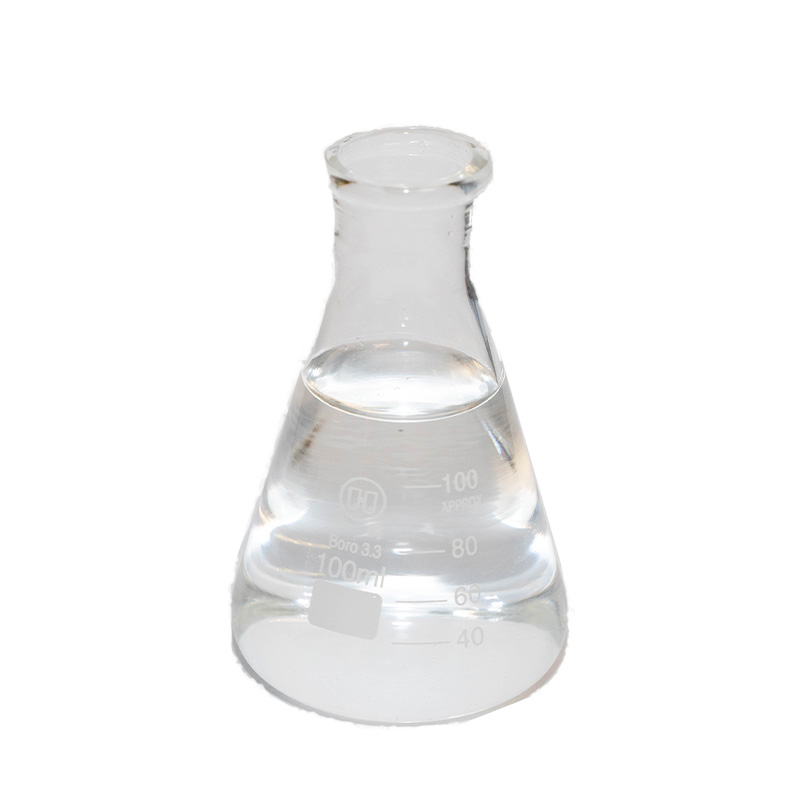
- Chemical name: 1-(chloromethyl)-2-vinylbenzene (2-vinylbenzyl chloride, 2-chloromethylstyrene)
- CAS: 22570-84-9 · EINECS: 245-092-5
- Molecular formula: C9H9Cl · Molecular weight: 152.62
- Boiling point: 223.4 ± 9.0 °C (predicted) · Density: 1.066 ± 0.06 g/cm³ (predicted)
- Appearance: light yellow to colorless liquid
- Model designation: JM 22570-84-9 · Supplier: Jumingchem (Jiangsu Juming Chemical Technology Co., Ltd.)
Jiangsu Juming Chemical Technology Co., Ltd. (Jumingchem) is a specialty chemical manufacturer established in 2017 in Jiangsu, China. Its production site covers 78,000 m² and includes a 3,000 m² R&D center, a 300 m² pilot plant and a 600 m² GMP workshop. The company's electronic-grade portfolio includes 5-Methyl-1H-benzotriazole (5M-BTA), 4-vinylbenzyl chloride, 2-vinylbenzyl chloride, 3-vinylbenzyl chloride, mixed vinylbenzyl chloride and BPADA.
Where Negative Photoresist Adhesion Actually Fails
A negative photoresist crosslinks on exposure, so the exposed area becomes the final pattern. That architecture is efficient for thick films and for exposure tools where the unexposed material is easier to dissolve away, but it makes the resist–substrate interface load-bearing. When that interface cannot carry the stress of development and the bakes that follow, failure appears in a small number of recognizable ways.
- Pattern lift-off and peeling. Fine features detach during development or during the rinse after it, typically where developer has penetrated beneath the resist edge.
- Edge undercut. The developer moves laterally under the feature faster than the bulk dissolves, producing a profile that will not hold critical dimension.
- Swelling-driven distortion. Solvent uptake in partially crosslinked regions swells the film; on drying, the induced stress pulls features out of shape or away from the substrate.
- Residue and scum. Incomplete dissolution of low-molecular-weight fractions leaves material in developed areas, which later shows up as defects or as a mask in an etch step.
- Post-bake cracking. A crosslink density gradient through the film thickness concentrates stress at the interface and at the feature base, and the film cracks or delaminates after hard bake.
Each symptom points to a different lever. Lift-off and undercut are interfacial and dissolution-kinetics problems. Swelling is a solubility-parameter problem. Cracking is a network-uniformity problem. What they share is that all three can be influenced by resin chemistry before the first wafer is coated.
The underlying causes fall into five groups:
- Insufficient interfacial interaction. If the cured film has no polar or reactive groups capable of interacting with the substrate surface, adhesion rests on weak dispersion forces alone.
- Non-uniform crosslinking. A network that cures densely at the surface and loosely at the interface will fail at its weakest plane, which is where it meets the substrate.
- Unreacted or low-molecular-weight fractions. These plasticize the film, increase swelling and leave residue after development.
- Process-window mismatch. Soft bake, exposure dose, post-exposure bake and development time interact, and a resin that is sensitive to any one of them narrows the window for all of them.
- Raw-material variability. Isomer ratio, inhibitor level and metal-ion load in the incoming monomer propagate into the resin and then into pattern fidelity.
Industry Background: Why Adhesion Is a Growing Constraint
Adhesion has become more visible as a constraint because the applications that still depend on negative photoresists are the ones with the least tolerance for rework.
Grand View Research estimated the global electronic-grade photoresist market at USD 4.96 billion in 2024, and the broader electronic chemicals and materials market at USD 78.5 billion in 2025. SEMI reported global semiconductor materials revenue of USD 73.2 billion in 2025. Grand View Research further estimated that Asia Pacific accounted for 66.6% of electronic materials and chemicals market revenue in 2025. Against figures of this scale, the cost of a pattern-fidelity failure in a qualified process is high relative to the cost of the monomer itself, which is one reason qualification effort concentrates on incoming material consistency rather than on unit price alone.
Within that market, negative photoresists remain significant in electron-beam lithography and in advanced packaging dielectric layers. These are the two lithography application areas Jumingchem lists for its vinylbenzyl chloride products, alongside the manufacture of homogeneous ion-exchange membranes, ultrapure water resins and chelating resins. All of them depend on a polymer in which functional sites are distributed predictably rather than concentrated at a surface.
How 2-Vinylbenzyl Chloride Addresses the Adhesion Problem
The case for 2-vinylbenzyl chloride rests on molecular structure rather than on an additive effect. The sections below separate what the molecule does chemically from what a formulator must still validate on their own resin system.
Two functional groups, two independent jobs
The molecule is a styrene derivative: a benzene ring carrying both a vinyl group and a chloromethyl group in the 1 and 2 positions. The vinyl group copolymerizes with the other monomers in the resist resin, so the molecule becomes part of the backbone instead of remaining a free additive. The chloromethyl group survives that polymerization and stays available for later chemistry. Jumingchem's product data notes that reactions on the chloromethyl group can be carried out either before or after polymerization, and describes vinylbenzyl chloride as a dual-functional monomer that is readily derivatized by chloride displacement.
That combination is what connects the monomer to adhesion. A resin built with 2-VBC carries pendant benzylic chloride sites distributed along each chain. Those sites can be converted into crosslinking points, into polar or ionic groups, or into other functional handles, depending on which conversion chemistry the formulator selects. The result is a network in which reactive functionality belongs to the polymer architecture rather than to a treatment applied afterwards.
Uniform functionalization instead of a surface layer
Adhesion treatments applied after coating act at the interface but do nothing about the crosslink gradient through the film. Functionality carried on the polymer chain behaves differently. Because the chloromethyl sites are distributed statistically along each chain, the conversions that follow make reactive groups available throughout the film, including at the interface with the substrate. The same design logic underlies the use of vinylbenzyl chloride in the manufacture of homogeneous ion-exchange membranes, where the chloromethyl group is converted into an ion-exchange site and the resulting charge distribution has to be even across the membrane rather than concentrated at its surfaces.
Crosslink density and the stress problem
Post-bake cracking is a stress problem, and stress in a negative resist film comes largely from the way the network forms. A resin that crosslinks densely near the surface cures faster there and shrinks more there, leaving the interface under tension. Spacing crosslinkable sites along the backbone rather than clustering them produces a more even cure through the thickness. 2-VBC contributes to that evenness because it introduces the crosslinkable handle as a comonomer unit, so the spacing is set by the copolymerization rather than by diffusion of a small-molecule crosslinker into the film. Formulators should treat this as a design principle to be validated on their own resin system, not as an outcome a monomer specification can guarantee.
Dielectric layers and membranes as cross-checks
Jumingchem documents three application families for its vinylbenzyl chloride products: high-performance negative photoresist resins such as electron-beam resists, advanced packaging dielectric materials, and the manufacture of homogeneous ion-exchange membranes, ultrapure water resins and chelating resins. The first two are lithography applications judged on pattern fidelity. The third is a useful cross-check on monomer behaviour, because a membrane maker needs the functional group distributed evenly enough that performance does not depend on surface effects — the same requirement that makes the monomer useful inside a resist film.
Physical properties that affect handling
2-VBC is a light yellow to colorless liquid with a molecular formula of C9H9Cl and a molecular weight of 152.62. Its boiling point is reported as 223.4 ± 9.0 °C and its density as 1.066 ± 0.06 g/cm³, both predicted values in the supplier's published product data. For process design, the comparatively high boiling point means mild vacuum or gentle heating will not readily strip the monomer, and a density close to that of water means phase behaviour in aqueous work-up deserves attention during scale-up. These are handling considerations, not performance claims, and predicted values should be confirmed experimentally before they are written into a process specification.
Step-by-Step: From Monomer Selection to Validated Pattern Fidelity
Adhesion problems are rarely solved by changing one raw material. The sequence below is the order in which a lithography project can evaluate 2-vinylbenzyl chloride honestly, so that any improvement can be attributed to the monomer rather than to an uncontrolled change somewhere else in the formulation.
- Characterize the failure mode first. Establish whether the defect is lift-off, undercut, swelling, residue or post-bake cracking, using cross-sections and defect maps. Different modes call for different formulation levers, and a monomer change made without this baseline cannot be evaluated.
- Fix the reference formulation. Hold solvent, photoinitiator package, bake conditions and developer constant. Change one variable at a time, starting with the comonomer ratio rather than with several parameters together.
- Select the isomer deliberately. 2-VBC (CAS 22570-84-9), 3-VBC (CAS 39833-65-3), 4-VBC (CAS 1592-20-7) and mixed vinylbenzyl chloride (CAS 30030-25-2) are all electronic-grade products with the same molecular formula, C9H9Cl, and the same nominal molecular weight. They differ in substitution position, and therefore in how they pack and copolymerize. The comparison table below lists the parameters Jumingchem publishes for each.
- Set the comonomer ratio against the target network. Because 2-VBC supplies the crosslinkable handle, its loading determines the available functional-site density. Treat the loading as a design variable with an upper bound: a higher handle count does not automatically improve adhesion if it also raises shrinkage or narrows the development window.
- Lock the derivatization step. Decide whether the chloromethyl conversion happens before or after polymerization — Jumingchem's data confirms both routes are feasible — and fix the conversion conditions, because the degree of conversion sets the final polarity and crosslink density.
- Control water and oxygen during synthesis. Electronic-grade vinylbenzyl chloride work is carried out under inert gas with closed-system feeding and precise temperature control in anhydrous conditions. Moisture and oxygen introduce batch-to-batch variation that later appears as irreproducible adhesion.
- Verify incoming purity before coating. Jumingchem's quality system uses ICP-MS, HPLC and GC to control metal ions, assay and volatile impurities. Request certificate-of-analysis data that includes metal-ion results, not only the assay figure, because trace metals affect both cure behaviour and device yield.
- Qualify on patterned wafers, then scale. Adhesion is confirmed only by pattern fidelity: critical-dimension uniformity, absence of lift-off, and cross-section profile. Once the formulation is fixed, transfer to production should preserve the same monomer specification, inhibitor level and purity grade.
Where 2-Vinylbenzyl Chloride Fits: Use Cases
Electron-beam negative photoresists
Electron-beam lithography places a premium on a resist that crosslinks predictably at low exposure energy and holds fine features through development. 2-VBC is documented as a core monomer for synthesizing high-performance negative photoresist resins of this type. Its role is to supply the crosslinkable handle as part of the backbone, which keeps the network formation under the control of the copolymer design.
Advanced packaging dielectric layers
Advanced packaging dielectric materials are the second lithography application Jumingchem lists. Here the film must combine electrical performance with mechanical integrity across thermal cycling, so the same network-uniformity argument applies: functionality distributed along the chain supports a dielectric layer whose properties do not depend on surface treatment alone.
Homogeneous ion-exchange membranes
Membrane manufacturers use vinylbenzyl chloride because the chloromethyl group can be converted into an ion-exchange site after polymerization. A homogeneous membrane requires that conversion to proceed evenly through the material, which makes this application a direct test of how uniformly the monomer distributes in a copolymer.
Ultrapure water resins and chelating resins
Ultrapure water resins and chelating resins use the same chloromethyl chemistry to attach functional groups to a polymer scaffold. These are not lithography applications, but they illustrate the monomer's behaviour in crosslinked systems where trace extractables matter — the same concern that governs metal-ion specifications in electronic-grade resist work.
Custom isomer ratio development
Mixed vinylbenzyl chloride is economical for high-volume industrial use, but resist formulation usually needs a defined isomer ratio so that batch-to-batch behaviour stays constant. Jumingchem supports custom o/m/p isomer ratio development, from sample development through scale-up production, including R&D collaboration with polymer material companies.
Comparing Electronic-Grade Vinylbenzyl Chloride Isomers
Isomer choice is a formulation decision, not a procurement formality. The table below uses only the parameters published in Jumingchem's product data; where a value is not stated there, it is not stated here either.
| Parameter | 2-VBC | 3-VBC | 4-VBC | Mixed VBC |
|---|---|---|---|---|
| CAS number | 22570-84-9 | 39833-65-3 | 1592-20-7 | 30030-25-2 |
| EINECS | 245-092-5 | 254-649-1 | 216-471-2 | 250-005-9 |
| Molecular formula | C9H9Cl | C9H9Cl | C9H9Cl | C9H9Cl |
| Molecular weight | 152.62 | 152.62076 | 152.62 | 152.62 |
| Appearance | Light yellow to colorless liquid | Light yellow to colorless liquid | Colorless to pale yellow transparent liquid | Light yellow to colorless liquid |
| Boiling point | 223.4 ± 9.0 °C (predicted) | Not stated in published data | 229 °C (lit.) | 229 °C (lit.) |
| Density | 1.066 ± 0.06 g/cm³ (predicted) | Not stated in published data | 1.083 g/mL at 25 °C (lit.) | 1.074 g/mL at 25 °C (lit.) |
| Melting point | Not stated in published data | Not stated in published data | Not stated in published data | −30 °C |
| Stabilizer / inhibitor | Not stated in published data | ~0.1% TBC stabilizer | Not stated in published data | 50–100 ppm TBC inhibitor |
| Model designation | JM 22570-84-9 | JM 39833-65-3 | JM 1592-20-7 | JM 30030-25-2 |
| Documented applications | Core monomers for high-performance negative photoresist resins (such as E-beam photoresist) and advanced packaging dielectric materials; manufacture of homogeneous ion-exchange membranes, ultrapure water resins and chelating resins | |||
Three readings of this table are worth flagging. First, the molecular weight of 3-VBC is published to more decimal places than the others, but it is the same molecule at the same nominal mass — the difference is reporting precision, not product difference. Second, 2-VBC is the only isomer in the set for which Jumingchem publishes boiling point and density values, and both are predicted rather than measured, so any process specification that depends on them should be confirmed experimentally. Third, the mixed grade carries an explicit inhibitor figure while the single-isomer grades do not all disclose one, which is precisely the kind of gap that should be closed in writing before a formulation is locked.
Purity, Documentation and Scale-Up Checks
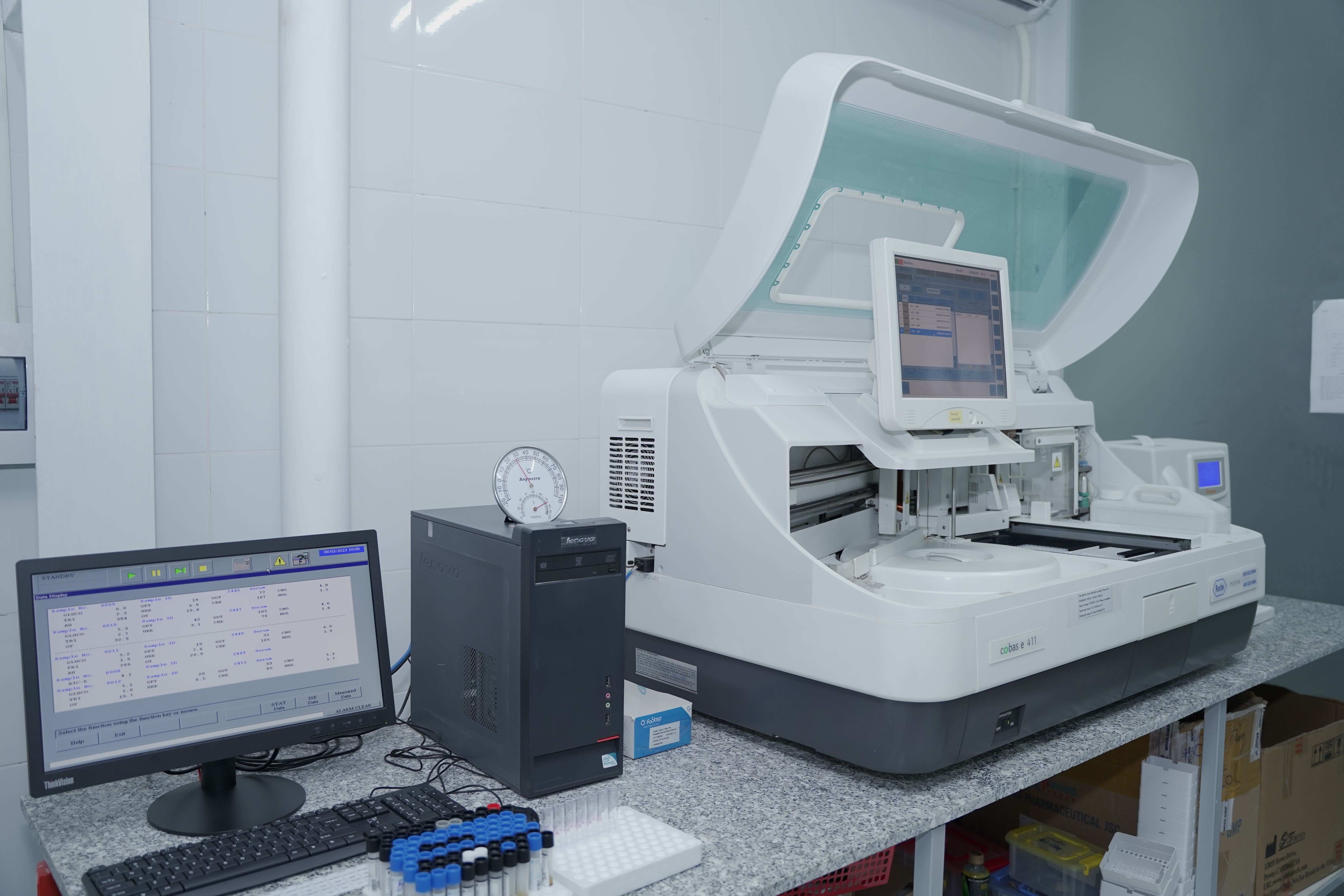
Adhesion work is sensitive to trace impurities, so the supplier's quality system forms part of the technical case rather than a procurement annex. Jumingchem operates an ISO 9001 quality management system and performs electronic-grade purification to ppb-level metal ion content — 10 ppb or below, aligned with SEMI Grade 4+ references — in ISO Class 6 GMP cleanrooms. Analysis relies on ICP-MS, HPLC and GC systems, and the production chain is fully sealed and temperature-controlled, with batch traceability, retained samples and support for third-party re-inspection by SGS, BV or Intertek.
Scale is handled across multiple production bases in China with a combined annual capacity of 60,000 tons, and the company reports a range from gram-level R&D quantities to hundred-ton industrial production. The supporting technology is microchannel and continuous flow processing, which Jumingchem describes as delivering 10–100× higher heat and mass transfer efficiency than conventional batch reactors for challenging chemistries, together with end-to-end CDMO capability from route development to industrial scale-up. The R&D team consists of 25 engineers.
Frequently Asked Questions
What documentation should accompany an electronic-grade 2-vinylbenzyl chloride order?
Jumingchem operates an ISO 9001 quality management system, and electronic-grade production runs to ppb-level metal ion content of 10 ppb or below, aligned with SEMI Grade 4+ references, in ISO Class 6 GMP cleanrooms. Batch documentation includes certificate-of-analysis data generated by ICP-MS, HPLC and GC, batch traceability and retained samples, with support for third-party re-inspection by SGS, BV or Intertek. Buyers should also request a written statement of the inhibitor or stabilizer package for the specific isomer being qualified, because published data does not disclose an inhibitor figure for every grade.
Can Jumingchem supply a custom isomer ratio and scale it from sample to production?
Yes. Custom o/m/p isomer ratio development is part of the company's stated project scope, running from sample development through scale-up production and including R&D collaboration with polymer material companies. Capacity supports this: multiple production bases in China with 60,000 tons of combined annual capacity, flexible output from gram-level R&D quantities to hundred-ton industrial production, microchannel and continuous flow reactors for challenging chemistries, and end-to-end CDMO service from process development to industrial scale-up, supported by a 25-engineer R&D team.
How is 2-vinylbenzyl chloride priced?
There is no public list price for electronic-grade 2-vinylbenzyl chloride, and the figure is built from the specification rather than quoted from a catalogue. The variables that move it are purity grade, isomer purity and ratio, batch size, packaging format, the inhibitor package, and the documentation and testing scope attached to the order — metal-ion data and third-party re-inspection change the cost basis compared with an assay-only certificate. A quotation should therefore be requested against a written specification so that two offers can be compared on the same basis.
Can I evaluate 2-VBC at laboratory scale before committing to a production order?
Yes. Jumingchem's production model supports gram-level R&D quantities alongside hundred-ton industrial output, and custom isomer development starts at the sample stage before scale-up. For a meaningful evaluation, fix the reference resist formulation first, change only the comonomer ratio or the isomer, and judge the result on patterned wafers rather than on bulk film properties alone.
What lead time should be planned for an electronic-grade monomer order?
Lead time depends on the grade, the isomer ratio, the batch size and the testing scope requested, so it is confirmed per order rather than published as a fixed figure. Two structural factors support scheduling: production runs across multiple bases in China with 60,000 tons of combined annual capacity, and the company exports roughly 70% of output to markets including the USA, Korea, Japan, Taiwan region, Germany, Southeast Asia and the Middle East, so export documentation is a routine part of the flow. The practical next step is to send the target specification and volume for a sample request and a dated quotation through Jumingchem's website or sales@jumingchem.com.
Conclusion
Adhesion failure in a negative photoresist is rarely solved by adding something at the end of the formulation. It is solved by designing a network in which reactive functionality is distributed through the polymer, crosslink density is even across the film thickness, and the interfacial chemistry is part of the resin rather than a coating on top of it. 2-Vinylbenzyl chloride contributes to that design because it carries a polymerizable vinyl group and a derivatizable chloromethyl group in the same molecule, and because it is copolymerized into the backbone instead of remaining a free additive.
The material facts are narrow and should be treated as such: CAS 22570-84-9, molecular formula C9H9Cl, molecular weight 152.62, boiling point 223.4 ± 9.0 °C and density 1.066 ± 0.06 g/cm³ as predicted values, supplied as a light yellow to colorless electronic-grade liquid under model designation JM 22570-84-9. What those facts enable is a formulation route to better pattern fidelity — one that has to be proven on patterned wafers, with the isomer and inhibitor package fixed, before it becomes a process specification.
Next Step: Sample and Specification Review
Jumingchem supplies electronic-grade 2-vinylbenzyl chloride (JM 22570-84-9) and the related 3-VBC, 4-VBC and mixed VBC grades, with ppb-level metal ion control, ISO 9001 quality management and custom isomer ratio development from sample to scale.
Send your target specification, isomer ratio and volume to request a sample and a dated quotation:
Email: sales@jumingchem.com · WhatsApp: +86 159 6162 4309
Website: en.jmchemchina.com · Product catalogue: Download the Jiangsu Juming catalogue (PDF)
Third-party market figures cited in this article are attributed to Grand View Research (electronic-grade photoresist market, 2024; electronic chemicals and materials market, 2025; Asia Pacific regional share, 2025) and SEMI (global semiconductor materials revenue, 2025). All product parameters are quoted from Jumingchem's published product data, with predicted values identified as such.
Have Questions or Need More Details?
Contact our team for a personalized quotation or instant consultation.
Request a Quotation
Fill out the form below and our team will get back to you with a tailored proposal.
WhatsApp Direct Chat
Prefer to chat in real-time? Message us on WhatsApp for instant assistance & quick answers.
- Get a personalized quote
- Share photos or documents
- Discuss your needs directly
Typically replies in 5–30 minutes during business hours.