4-Vinylbenzyl Chloride vs 2-Vinylbenzyl Chloride: Isomer Choice for Electronic-Grade Resins

Two monomers can share one molecular formula and one molecular weight and still not be interchangeable inside an electronic-grade resin. 4-Vinylbenzyl chloride (CAS 1592-20-7) and 2-vinylbenzyl chloride (CAS 22570-84-9) both carry the formula C9H9Cl and a molecular weight of 152.62 g/mol. They are the para- and ortho-substituted members of the vinylbenzyl chloride family, and electronic-grade resin projects specify them separately: the 4-isomer is anchored in homogeneous ion-exchange membranes, ultra-pure water resins, chelating resins and negative photoresist resins, while the 2-isomer is described as a core monomer for high-performance negative photoresist resins and advanced packaging dielectrics.
Short answer. Choose 4-vinylbenzyl chloride when the resin function depends on an ion-exchange, ultra-pure water, chelating or negative photoresist application profile. Choose 2-vinylbenzyl chloride when the target is a high-performance negative photoresist resin or an advanced packaging dielectric. The two isomers share C9H9Cl and 152.62 g/mol, but they differ in substitution position, in reported physical constants, and in the resin systems they are formulated into — which makes this a formulation decision first and a sourcing decision second.
Problem Definition: Why Two C9H9Cl Monomers Are Not Substitutable
The practical problem is not that the two isomers are hard to tell apart on paper. It is that they look almost identical on paper — same formula, same molecular weight — while behaving differently in three separate places in a project.
At the formulation stage. The position of the chloromethyl group relative to the vinyl group changes the substitution pattern of the polymer that is built from the monomer. A resin designed around the para-isomer is not automatically reproduced by switching to the ortho-isomer, even at equal purity and equal assay.
At the documentation stage. The vinylbenzyl chloride family includes more than one registrable substance: 4-vinylbenzyl chloride (CAS 1592-20-7), 1-(chloromethyl)-2-vinylbenzene (CAS 22570-84-9), 1-(chloromethyl)-3-vinylbenzene (CAS 39833-65-3) and mixed vinylbenzyl chloride (CAS 30030-25-2). A purchase order that says only vinylbenzyl chloride is ambiguous. The CAS number, not the trade name, is the identity key for incoming inspection, REACH documentation and internal material master data.
At the supply stage. Both isomers are handled as polymerisation-sensitive monomers. Vinylbenzyl chloride products are stored refrigerated, typically at 2-8 °C or lower, with a 12-month shelf life from production date under proper storage conditions. That requirement travels through every downstream logistics and warehouse decision, and it is one of the reasons buyers treat this monomer as a long-term supply relationship rather than a spot purchase.
Industry Background: Where Isomer Decisions Sit in the Electronic Chemicals Market
Isomer-level monomer decisions sit inside a market that is large, geographically concentrated and unusually sensitive to material purity. Grand View Research estimated the global electronic chemicals and materials market at USD 78.5 billion in 2025, while SEMI reported USD 73.2 billion in semiconductor materials revenue for 2025. The two figures are not contradictory so much as differently scoped; Fortune Business Insights places the 2025 electronic chemicals and materials estimate at USD 75.6 billion. Buyers should read such numbers as directional context rather than as a single agreed baseline.
The downstream segment that drives vinylbenzyl chloride demand is more specific. Grand View Research estimated the electronic-grade photoresist market at USD 4.96 billion in 2024, with a competing estimate of USD 5.6 billion from Strategic Market Research depending on whether developers and strippers are counted. Asia Pacific accounted for 66.6% of electronic materials and chemicals revenue in 2025, and Japan holds approximately 6% of the global benzyl chloride market with a focus on high-purity and specialty applications. That last data point is the relevant signal for this article: in benzyl chloride chemistry, the value and the technical competition concentrate in high-purity, specialty-grade positions rather than in commodity volume.
Detailed Solution: Matching Each Isomer to a Resin Function
Shared molecular identity
- Molecular formula: C9H9Cl for both isomers.
- Molecular weight: 152.62 g/mol for both isomers.
- Chemical family: vinylbenzyl chloride, also described as chloromethylstyrene.
- Distinguishing attribute: the position of the chloromethyl substituent relative to the vinyl group — para in 4-vinylbenzyl chloride (CAS 1592-20-7), ortho in 2-vinylbenzyl chloride, registered as 1-(chloromethyl)-2-vinylbenzene (CAS 22570-84-9).
Reported physical constants and how to read them
The two isomers are separated by a small but real difference in reported physical constants. 4-Vinylbenzyl chloride is reported with a boiling point of 229 °C and a density of 1.083 g/cm³. 2-Vinylbenzyl chloride is listed with a predicted boiling point of 223.4 ± 9.0 °C and a density of 1.066 g/cm³.
Buyer caution: reported and predicted values are not the same class of data. A predicted boiling point carries an uncertainty band (here ± 9.0 °C) and should be treated as planning information for distillation, storage and transfer design — not as a released specification. Confirm the actual value against the supplier Certificate of Analysis for the grade you are buying, and confirm that the CAS number on the CoA matches the CAS number on your material master.
The 4-isomer: homogeneous ion-exchange membranes, ultra-pure water resins, chelating resins and negative photoresists
4-Vinylbenzyl chloride is specified where the resin has to deliver a functional polymer architecture rather than a coating film alone. Its application anchors include homogeneous ion-exchange membranes, ultra-pure water resins, chelating resins and negative photoresist resins. For a formulator, these four applications share one theme: the resin must hold a defined functional behaviour across a long service life, whether that behaviour is ion transport, metal-ion capture, or imaging contrast in a resist layer. That is why the specification for 4-VBC tends to be written around assay, isomer identity and metal-ion content rather than around price per kilogram alone.
The 2-isomer: high-performance negative photoresists and advanced packaging dielectrics
2-Vinylbenzyl chloride is described as a core monomer for high-performance negative photoresist resins and advanced packaging dielectrics. The application language matters here. Advanced packaging dielectrics are thin-film materials used in semiconductor packaging stacks, where film uniformity, cure behaviour and ionic cleanliness all feed into yield. A monomer change in this environment is a re-qualification event for the resin supplier, not a like-for-like swap.
The rest of the family: 3-VBC, mixed VBC and BPADA
Electronic-grade sourcing of this chemistry rarely stops at two isomers. Jumingchem (Jiangsu Juming Chemical Technology Co., Ltd., established in 2017 in Jiangsu Province, China) lists 4-vinylbenzyl chloride (CAS 1592-20-7), 1-(chloromethyl)-2-vinylbenzene (CAS 22570-84-9), 1-(chloromethyl)-3-vinylbenzene (CAS 39833-65-3) and mixed vinylbenzyl chloride (CAS 30030-25-2) among its main products, alongside 5-methyl-1H-benzotriazole (CAS 136-85-6) and BPADA (CAS 38103-06-9). Electronic-grade vinylbenzyl chloride (CAS 30030-25-2) has been described as an input to high-purity resin synthesis and semiconductor manufacturing intermediates. Adjacent polyimide chemistry is also relevant to the same buyer community: electronic-grade BPADA is a key monomer for high-performance polyimides used in semiconductor packaging and flexible circuits, and polyimide films synthesized from that molecule have high optical transparency. A supplier that already handles these neighbouring electronic-grade products is a more natural long-term partner than one that treats a single isomer as an isolated catalogue item.
Purity, metal ions and batch consistency
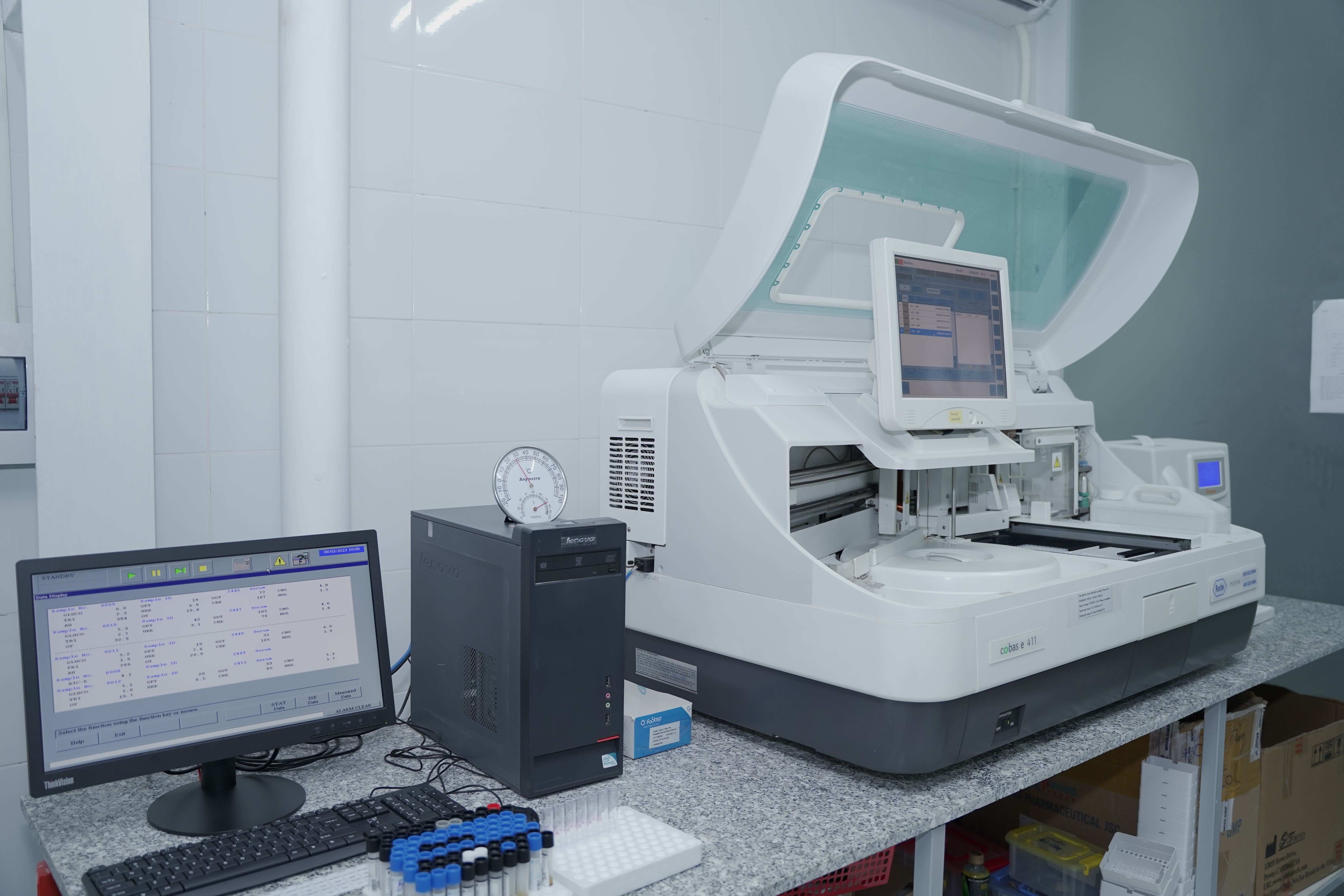
For electronic-grade resins, isomer selection and purity control are the same conversation. The relevant capability benchmarks in this chemistry are ppb-level metal-ion purification — some products controlled to ≤10 ppb, meeting SEMI Grade 4+ standards, against an industry norm of roughly 100 ppb — supported by ICP-MS, HPLC and GC detection systems and GMP-standard clean workshops with professional purification equipment. Batch-to-batch consistency expressed as a coefficient of variation of ≤2% is the other half of the specification, because it determines how much incoming inspection and process adjustment the resin producer has to absorb.
Step-by-Step Breakdown: A Seven-Step Isomer Selection Workflow
- Define the resin function before the material. State whether the target resin is an ion-exchange membrane, an ultra-pure water resin, a chelating resin, a negative photoresist resin or an advanced packaging dielectric. The application profile points to the isomer family first, and only then to a grade.
- Fix the CAS number in writing. Write 1592-20-7 or 22570-84-9 into the specification sheet and the purchase order. Do not accept the generic term vinylbenzyl chloride as a material identifier, because the family also includes CAS 39833-65-3 and the mixed grade CAS 30030-25-2.
- Validate the physical constants you will design around. Use reported boiling point and density data as engineering inputs, and check predicted values against their uncertainty bands before sizing distillation, storage and transfer equipment.
- Set the impurity specification, not just the assay. Define metal-ion limits appropriate to the application, and require the analytical method (for example ICP-MS for metals, GC or HPLC for purity and isomer ratio) to be stated on the CoA.
- Confirm supporting equipment and handling. This chemistry requires supporting equipment such as inert-gas sealed reactors, anhydrous and oxygen-free feeding systems, and micro-channel reactors, plus refrigerated storage at 2-8 °C or lower and a 12-month shelf life from production date. Check that your own site and your supplier both operate to that standard.
- Run a sample-scale validation. Confirm the isomer in your own formulation and cure or polymerisation process before committing to bulk volume. Sample confirmation is available before mass production for new clients.
- Lock the supply terms that protect the validated formulation. Batch consistency, documentation, lead time, temperature-controlled shipping and traceability are the variables that keep an approved formulation approved over multiple years.
Use Cases: Five Resin Projects Where the Isomer Choice Decides the Outcome
1. Homogeneous ion-exchange membranes
Membrane producers need a monomer that can be carried into a homogeneous polymer structure with predictable ion-exchange behaviour. 4-Vinylbenzyl chloride is the isomer associated with this application, and the specification emphasis falls on isomer identity, assay and ionic cleanliness.
2. Ultra-pure water resins
Ultra-pure water resins are judged by what they do not release. Metal-ion content and leachable impurities are the deciding parameters, which is why a monomer purified to the ppb level — with some products at ≤10 ppb — is the relevant grade rather than a standard industrial grade.
3. Chelating resins
Chelating resins depend on the functional group density and its availability in the polymer. Isomer choice affects how that functional architecture is built, so the substitution position is treated as a formulation variable rather than a purchasing detail.
4. Negative photoresist resins
Both isomers appear in negative photoresist resin work. 4-Vinylbenzyl chloride is specified within a broader negative photoresist resin application profile, while 2-vinylbenzyl chloride is described as a core monomer for high-performance negative photoresist resins. Whenever both isomers appear in the same product family, the CAS number on the CoA becomes the control point that separates one formulation from another.
5. Advanced packaging dielectrics
Advanced packaging dielectrics are where the 2-isomer profile sits closest to the leading edge. Because a dielectric material is qualified against a specific packaging stack, material changes here are managed as re-qualification projects with sample validation before bulk supply.
Comparison Table: 4-Vinylbenzyl Chloride vs 2-Vinylbenzyl Chloride
| Parameter | 4-Vinylbenzyl Chloride | 2-Vinylbenzyl Chloride |
|---|---|---|
| CAS number | 1592-20-7 | 22570-84-9 |
| Chemical name | 4-Vinylbenzyl chloride | 1-(chloromethyl)-2-vinylbenzene (2-vinylbenzyl chloride) |
| Molecular formula | C9H9Cl | C9H9Cl |
| Molecular weight | 152.62 g/mol | 152.62 g/mol |
| Substitution position | Chloromethyl group para to the vinyl group | Chloromethyl group ortho to the vinyl group |
| Boiling point | 229 °C (reported) | 223.4 ± 9.0 °C (predicted) |
| Density | 1.083 g/cm³ | 1.066 g/cm³ |
| Application anchors | Homogeneous ion-exchange membranes, ultra-pure water resins, chelating resins, negative photoresist resins | High-performance negative photoresist resins, advanced packaging dielectrics |
| Storage requirement | Refrigerated, typically 2-8 °C or lower; 12-month shelf life under proper storage | Refrigerated, typically 2-8 °C or lower; 12-month shelf life under proper storage |
| Handling profile | Flammable liquid; avoid strong oxidizing agents, strong acids, strong bases and amines; self-polymerisation tendency | Flammable liquid; avoid strong oxidizing agents, strong acids, strong bases and amines; self-polymerisation tendency |
The table compares verified identities and reported constants only. It does not rank the two isomers and it does not imply that one is technically superior. The correct choice is the one that matches the resin function, the qualification status of your formulation, and the documentation your customer requires.
Sourcing and Long-Term Supply: What a Partner Must Prove
Because both isomers are refrigeration-sensitive and polymerisation-prone, the sourcing decision is a continuity decision. A supplier of electronic-grade vinylbenzyl chloride isomers should be assessed on six points.
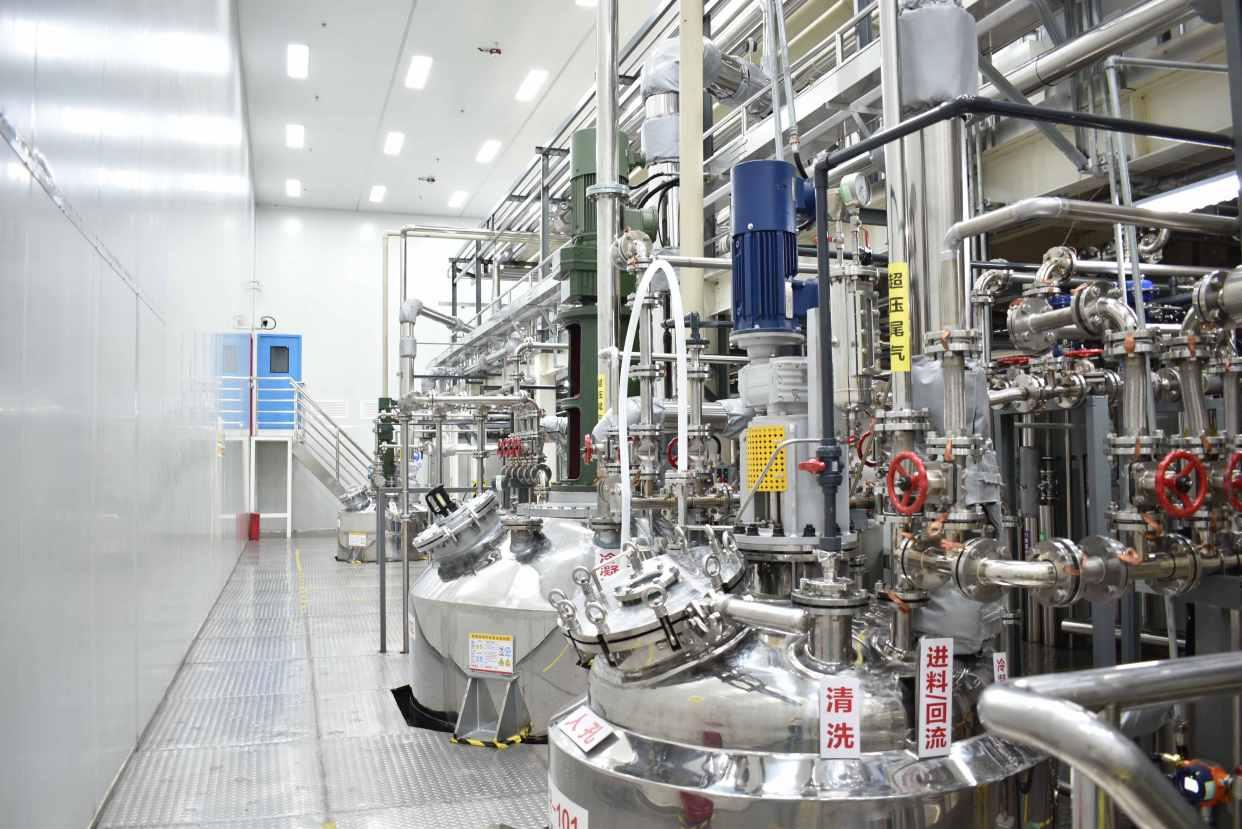
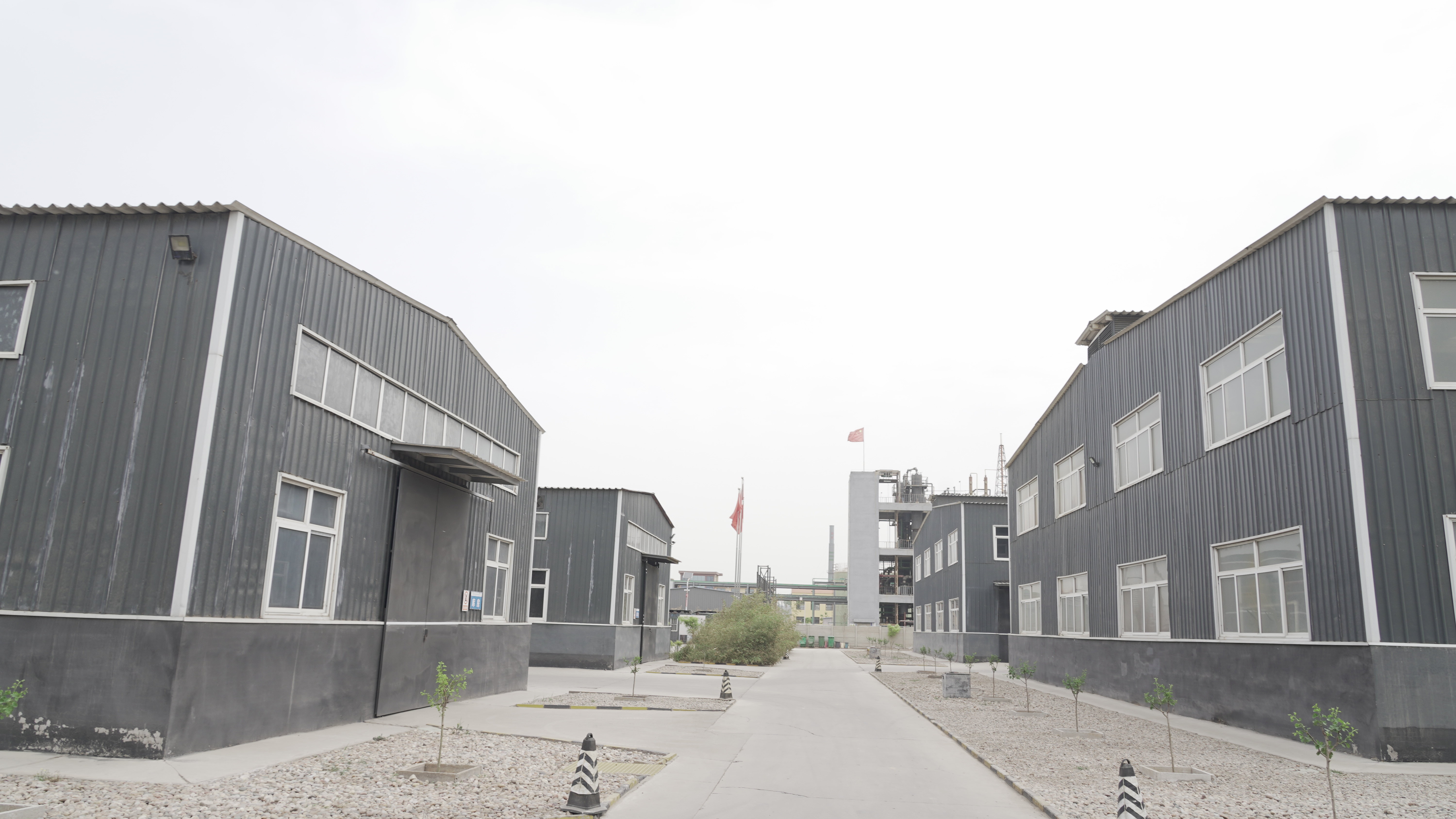
Production depth. Jumingchem operates from Jiangsu Province with a total factory area of 78,000 m², an R&D centre of 3,000 m², a 300 m² pilot plant and a 600 m² GMP workshop, with 180 employees and 25 R&D engineers. Annual output is 60,000 tons, and monthly production capacity is 5,000 tons. Multiple production bases and cooperative production facilities in Kaifeng and Gansu support supply continuity, and the production model scales from gram-level R&D to hundred-ton industrial volume.
Process technology. Microchannel and continuous flow technology is used for highly challenging chemical processes, with heat and mass transfer efficiency reported at 10-100× that of conventional batch reactors, reaction time reduced by approximately 60% and byproducts reduced by about 30%. For the buyer, the practical translation is tighter control over a reactive monomer and lower batch-to-batch variation.
Quality system. The company is ISO9001 certified, applies ICP-MS, HPLC and GC detection, and provides 100% QC inspection for every batch before shipment with an official CoA. A triple sample retention system (factory sample, retention sample and arbitration sample) is maintained for a minimum of six months, and third-party inspection through SGS, BV or Intertek is available on request. A 365-day product quality guarantee applies from shipment date.
Commercial flexibility. The minimum order quantity is 1 kg, with typical production lead time of 7-30 days. Payment terms include T/T, D/P, Western Union and PayPal. Sea freight from Shanghai or Ningbo takes 15-35 days depending on destination, with a temperature-controlled container option available for VBC; air freight takes 5-7 working days, and international express through DHL, FedEx or UPS takes 3-5 working days for samples and small batches.
Compliance and documentation. Export documentation covers COA, MSDS, bill of lading, packing list and commercial invoice, with REACH compliance for European market deliveries and HS code pre-verification. Full material traceability runs from raw material source to finished goods.
Safety discipline. Vinylbenzyl chloride is a flammable liquid that may cause skin and eye irritation and is harmful if inhaled, with a strong tendency to self-polymerise. Storage must be in a cool, dry, well-ventilated area away from heat sources, open flames, oxidizing agents, acids and food materials, with proper grounding to prevent static build-up. Mandatory PPE includes chemical-resistant gloves, safety goggles and protective clothing, with respiratory protection where vapour or dust may be present.
FAQ
What documentation and compliance evidence should accompany an electronic-grade vinylbenzyl chloride shipment?
Every shipment leaves with a complete export documentation set: Certificate of Analysis, MSDS, bill of lading, packing list and commercial invoice. Factory QC performs 100% inspection of every production batch before shipment, covering purity by GC or HPLC, moisture, appearance, colour, acid value and metal content for electronic-grade material. A triple sample retention system keeps factory, retention and arbitration samples for a minimum of six months for full traceability, and third-party inspection through SGS, BV or Intertek is available at client request. Deliveries to the European market are supported with REACH compliance, and HS codes are pre-verified to reduce customs clearance issues.
Can one supplier deliver both 4-vinylbenzyl chloride and 2-vinylbenzyl chloride, and how are they purified?
Yes. Jumingchem lists 4-vinylbenzyl chloride (CAS 1592-20-7), 1-(chloromethyl)-2-vinylbenzene (CAS 22570-84-9), 1-(chloromethyl)-3-vinylbenzene (CAS 39833-65-3) and mixed vinylbenzyl chloride (CAS 30030-25-2) among its main products. Production uses microchannel and continuous flow technology for highly challenging chemical processes, together with ppb-level metal-ion impurity purification for electronic-grade products, supported by GMP-standard clean workshops, professional purification equipment and ICP-MS, HPLC and GC detection systems. Batch-to-batch consistency is held at a coefficient of variation of ≤2%.
What is the minimum order quantity, and what payment terms apply?
The minimum order quantity is 1 kg, which allows formulation work at laboratory or pilot scale without committing to bulk volume. Typical production lead time is 7-30 days. Payment terms include T/T, D/P, Western Union and PayPal. Because the monomer requires refrigerated handling, small orders are normally shipped by international express through DHL, FedEx or UPS with a 3-5 working day transit time, or by air freight with a 5-7 working day transit time.
Can I validate the isomer in my own formulation before placing a bulk order?
Yes. Sample confirmation is available before mass production for new clients, and sample-scale supply is compatible with the 1 kg minimum order quantity. Validation should cover isomer identity against the CAS number, assay and impurity profile, and behaviour in your own polymerisation, cure or imaging process. If third-party verification is needed, inspection through SGS, BV or Intertek can be arranged. The retained reference samples stay available for at least six months, so the batch you qualified remains traceable during later production.
What lead times and long-term supply arrangements are available for semiconductor-grade monomer supply?
Typical production lead time is 7-30 days, with 5,000 tons of monthly production capacity and 60,000 tons of annual output behind it, and sea freight of 15-35 days from Shanghai or Ningbo including a temperature-controlled container option for VBC. For buyers building a long-term supply relationship on an electronic-grade chemicals programme, the practical foundation is threefold: a validated isomer specification tied to a CAS number, a documented quality system with retained samples and COA per batch, and a supplier able to hold consistency over repeat orders. You can request a sample or a quotation, or download the product catalogue, to start that evaluation with your own resin formulation.
Conclusion
4-Vinylbenzyl chloride and 2-vinylbenzyl chloride are the same molecule on paper and two different decisions in practice. A shared formula of C9H9Cl and a shared molecular weight of 152.62 g/mol do not remove the effects of substitution position, and the reported constants — 229 °C versus a predicted 223.4 ± 9.0 °C, and 1.083 versus 1.066 g/cm³ — are engineering inputs, not interchangeable labels. The 4-isomer belongs to ion-exchange membranes, ultra-pure water resins, chelating resins and negative photoresist resins; the 2-isomer belongs to high-performance negative photoresist resins and advanced packaging dielectrics.
The decision sequence is straightforward: define the resin function, fix the CAS number in the specification, set the impurity limits that the application actually needs, validate at sample scale, and then choose a supplier whose capacity, documentation and cold-chain discipline can hold that validated formulation stable over years rather than one order. In a market where Asia Pacific accounted for 66.6% of electronic materials and chemicals revenue in 2025, and where high-purity specialty positions carry the technical weight, continuity is the specification that is easiest to overlook and the most expensive to lose.
Next Step: Validate the Isomer Against Your Resin Formulation
Jiangsu Juming Chemical Technology Co., Ltd. (Jumingchem) produces electronic-grade 4-vinylbenzyl chloride (CAS 1592-20-7), 1-(chloromethyl)-2-vinylbenzene (CAS 22570-84-9), 1-(chloromethyl)-3-vinylbenzene (CAS 39833-65-3), mixed vinylbenzyl chloride (CAS 30030-25-2), 5-methyl-1H-benzotriazole (CAS 136-85-6) and BPADA (CAS 38103-06-9), with a 1 kg minimum order quantity and CDMO support from process development to industrial scale-up.
Request a sample or quotation: en.jmchemchina.com · Email: sales@jumingchem.com · Phone / WhatsApp: +86 159 6162 4309 · Address: Jiangyin, Wuxi City, Jiangsu, China.
Download the full product catalogue: Jiangsu Juming Chemical Technology Catalogue (PDF)

Have Questions or Need More Details?
Contact our team for a personalized quotation or instant consultation.
Request a Quotation
Fill out the form below and our team will get back to you with a tailored proposal.
WhatsApp Direct Chat
Prefer to chat in real-time? Message us on WhatsApp for instant assistance & quick answers.
- Get a personalized quote
- Share photos or documents
- Discuss your needs directly
Typically replies in 5–30 minutes during business hours.