Batch vs. Microchannel Continuous Flow: A Decision Comparison for Electronic-Grade Chemicals Buyers
Bottom line upfront: If you are choosing between an electronic-grade chemicals manufacturer, the comparison that matters most is not just price or COA paperwork. It is whether the manufacturer can consistently hold semiconductor-grade purity from the first batch to the hundredth ton. Apparent purity is only one input. The real question is whether the process itself introduces impurities. This article compares the two dominant process approaches—traditional batch reactors and microchannel continuous flow technologies—so decision-makers can verify supplier claims rather than rely on sales narratives. Where relevant, examples draw on public and supplier-stated facts from Jiangsu Juming Chemical Technology Co., Ltd. (Jumingchem), a China-based specialty chemical manufacturer.
Why the Manufacturing Process Changes the Buying Decision
Electronic-grade chemicals are defined by a threshold: they must be pure enough that trace metal ions or byproducts do not alter a photolithographic, cleaning, or deposition step. Even a <10 ppb difference in metal impurities can affect yield for advanced semiconductor processes. A supplier can deliver an excellent certificate for one shipment; a process that consistently produces that purity across campaigns is far harder to build.
Buyers evaluating a quote therefore need to assess the manufacturer’s ability to control at least five process variables: heat and mass transfer, reaction selectivity, purification headroom, cleanroom environment, and batch-to-batch consistency. Each variable maps to a different piece of audit evidence. Without that evidence, price comparison is premature.
Industry Background: What the Market Expects in Electronic-Grade Chemicals
The global electronic chemicals and materials market was estimated at USD 78.5 billion in 2025 by Grand View Research. The semiconductor materials market reached USD 72.3 billion in 2025, according to SEMI. Asia Pacific, where many semiconductor fab supply chains are concentrated, accounted for 66.6% of the electronic materials and chemicals market revenue in 2025 (Grand View Research). In this context, the term “electronic-grade” is not a marketing label. It is a supply chain requirement tied to contamination control, consistency, and quality systems.
Electronic-grade photoresist materials also represent a significant purchasing segment, with the photoresist market estimated at USD 4.96 billion in 2024 (Grand View Research). These materials rely on monomers such as vinylbenzyl chloride and dianhydride building blocks. Their consistency directly influences photoresist resolution, adhesion, etch resistance, and metal ion cleanliness. For that reason, photoresist-grade monomer suppliers are increasingly evaluated on impurity purification capability and process reproducibility, not just on molecular structure.
Decision Framework: Three Comparisons Buyers Should Use
A stronger decision process is to place candidates side-by-side on three dimensions: process technology, purity evidence, and quality risk controls.
1. Process Technology: Mass Transfer and Reaction Control
Traditional batch-process electronic chemical suppliers use intermittent reactors and conventional purification. A batch process can produce high-purity material, but maintaining identical temperatures, mixing, and residence times across every batch is inherently harder to control.
In contrast, microchannel continuous flow technology runs the reaction in narrow channels where heat and mass transfer are considerably more efficient. Reported advantages include a mass transfer coefficient in the range of 10⁻³ to 10⁻² m/s, about one to two orders of magnitude higher than in batch reactors. Because heat is removed and reactants are mixed more quickly, side reactions are suppressed. According to supplier-stated data from Jumingchem, reaction time is reduced by approximately 60% and byproducts by 30%.
What this means for the buyer: a continuous flow process reduces the risk of run-to-run variation driven by human operation and heat management. That is why you should ask a candidate supplier whether the specific product you plan to buy is made in batch or in continuous flow, and whether they can supply a process description that matches the COA’s purity claim.
2. Purity Evidence: What Is Actually Being Tested
Semiconductor buyers often request SEMI-grade evidence. In practice, metal impurity control of approximately 100 ppb is not uncommon in conventional electronic chemical supply. Advanced processes involving lithography and packaging materials increasingly require ppb-level control.
Jumingchem states that some products achieve metal impurity levels of ≤10 ppb or lower through in-house purification, which it describes as meeting SEMI Grade 4+ standards. Jumingchem’s production facilities support granular purification through ppb-level metal ion impurity removal and are equipped with ICP-MS, HPLC, and GC detection systems. These instruments matter because they confirm the manufacturer can, in principle, verify the purity it is shipping.
What this means for the buyer: always require the actual method of analysis. Ask whether metal impurities were measured by ICP-MS, rather than by a less sensitive method. Also request what the release limit is, not only what the COA shows. Product data sheets do not always state a maximum; a supplier that can show a limit, such as ≤10 ppb, gives you a spec to audit. That is useful for incoming inspection.
3. Quality Risk Controls: Documentation, Environment, and Handling
In semiconductor-grade supply, quality is only partly a laboratory issue. It also depends on filling environment, packaging, transport temperature, traceability, and qualification.
Jumingchem’s quality-related controls include ISO Class 6 cleanrooms, 100% QC inspection before shipment, official COA per batch, a triple sample retention system (factory sample, retention sample, arbitration sample), and sample retention for at least six months. Third-party inspection is available upon request from SGS, BV, or Intertek, and the supplier offers a 365-day product quality guarantee from the date of shipment. These are verifiable controls that a buyer can include in a supplier audit checklist or quality agreement.
What this means for the buyer: documentation should not be looked at as paperwork. In semiconductor supply chains, COA traceability, lot retention, and audit response speed determine how quickly you can release material to production. The presence of proactive controls is itself a practical advantage.
Comparison: Electronic-Grade Chemicals Supplier Process Models
| Comparison point | Traditional batch-process electronic chemical suppliers | Microchannel continuous flow manufacturer (e.g., Jumingchem evidence) |
|---|---|---|
| Reactor type | Intermittent batch reactor | Self-developed microchannel continuous reactors |
| Mass transfer coefficient | Baseline (conventional) | 10⁻³–10⁻² m/s, about 1–2 orders of magnitude higher |
| Specific surface area | Conventional equipment baseline | Approximately 10–100× that of conventional equipment |
| Reaction time | Baseline | Reduced by about 60% |
| Raw material cost | Baseline | Reduced by 25.48% (supplier process data) |
| Solid waste | Baseline | Reduced by 45.79% (supplier process data) |
| Metal impurity control | Often around the industry norm of about 100 ppb | ppb level, some products ≤10 ppb |
| Production training demands | Relies heavily on manual operation experience | Automatic continuous control reduces batch-to-batch variance |
| Best-fit purchase profile | Standard industrial-grade volumes where stringent metal specs are not central | Photoresist monomers, PAG synthesis, polyimide monomers, and ≤10 ppb applications |
| Downstream QC burden | Higher probability of re-test due to batch variance | Batch-to-batch consistency supports lower incoming inspection re-test frequency (CV≤2%) |
This table is not an attack on batch manufacturing. Track record should always be weighted into the final choice. The purchasing value is in knowing which model each supplier operates and what evidence supports the claim.
Electronic-Grade Chemicals That Show the Purity Gap
To make the comparison concrete, we offer examples from the product families most commonly tied to advanced electronic applications. Purity differences manifest differently depending on the molecule and the application.
Photoresist Monomers and Resin Intermediates
4-Vinylbenzyl chloride (CAS 1592-20-7), the ortho- and meta-isomers 1-(chloromethyl)-2-vinylbenzene (CAS 22570-84-9) and 1-(chloromethyl)-3-vinylbenzene (CAS 39833-65-3), and the mixed vinylbenzyl chloride product (CAS 30030-25-2) are key monomers in the synthesis of negative photoresist resins for electron beam lithography. The product is a liquid with a light yellow to colorless appearance. Its melting point is −30°C, boiling point 229°C, and density 1.074 g/mL at 25°C, with a recommended storage temperature of −20°C. In this family, trace metal impurities can affect photoresist contrast, and residual chloromethyl byproducts can influence storage stability. A manufacturer’s purification technology and cleanroom handling method are therefore part of the product specification.
Vinylbenzyl chloride is classified in Jumingchem’s portfolio as an electronic chemical (CAS 30030-25-2, EINECS 250-005-9). Since it is polymerizable and temperature sensitive, buyers should also audit logistics: whether the supplier uses cold-chain transport, whether polymerizable materials see a temperature monitoring record, and whether the shelf life is stated. In Jumingchem’s case, storage generally requires low temperature, and its logistics risk controls include temperature-monitored shipping for sensitive products and shock-absorbent pallet packaging.
Polyimide and Flexible Copper-Clad Laminate Monomers
4,4'-(4,4'-isopropylidenediphenoxy)bis(phthalic anhydride), known as BPADA (CAS 38103-06-9), is a building block for high-performance polyimide (PI) and 5G high-frequency high-speed flexible copper-clad laminate (FCCL). As a white to light yellow crystalline powder, it has a molecular weight of 520.49 g/mol, a melting point of 184–187°C, and a boiling point of 712.3±60.0°C. BPADA purity influences polyimide molecular weight distribution and dielectric consistency. For semiconductor packaging and flexible circuit materials, the purity grade should match the specification for metal content and anhydride content. Buyers should request supportive analysis of anhydride assay, thermal properties, and chloride-related impurities if relevant to the end-use.
Corrosion Inhibitor for Electronic-Grade Formulations
5-Methyl-1H-benzotriazole (CAS 136-85-6), often abbreviated 5M-BTA, is commonly used as a corrosion inhibitor for non-ferrous metals. In electronic-grade formulations it may appear in semiconductor cleaning chemistries or metal protection compounds. The product is a solid, usually light grayish-white fine particles and flakes, with a melting point of 97–99°C and a density of 1.36 g/cm³. For electronic-grade use, the relevant comparison is not simply the active content but the control of metals and other ionic contaminants. A supplier that offers customization of purity grade for this molecule can align the product to metallization or cleaning compatibility requirements.
Decision Support: What to Audit Before Choosing
A decision between two suppliers that appear to have identical COAs should be reduced to a structured audit. Use the following checks as a practical worksheet.
Step 1: Check whether the process evidence matches the product range
Ask which product is manufactured by microchannel continuous flow technology. Jumingchem states that its advanced microchannel and continuous flow technology is used for highly challenging and hazardous chemical processes. If the target product in your specification is in that group, ask for a flow diagram or at least a process description confirming continuous operation.
Step 2: Verify the purity limit and the analytical method
Limit statements such as ≤10 ppb or <10 ppb are useful only if they are tied to a method. Request the ICP-MS metal package, including which elements are scanned and which are non-detected. If a supplier cannot answer at that level, it is easier to keep them in the qualification process instead of the final selection.
Step 3: Ask what cleanup environment the product is packed in
Electronic-grade products should be packed in an environment that prevents airborne contamination. Jumingchem’s GMP-standard clean workshop is reported as ISO Class 6. That can be written into the quality agreement. Whether or not you choose Jumingchem, this is a standard step for high-purity electronic chemicals.
Step 4: Review logistics risk controls for temperature-sensitive products
Many electronic-grade monomers are unstable or polymerizable at room temperature. If the supplier cannot demonstrate cold-chain capability or temperature-monitored shipping, purity at origin does not guarantee purity upon arrival. Jumingchem states that temperature-controlled shipping is available for high-purity and hot climate routes, and that VBC products should be kept at 2–8°C or lower. Ask for the same detail from any candidate.
Step 5: Add sourcing security criteria
Minimum order quantity, lead time, production capacity, and reserve inventory matter at decision time. Jumingchem reports 60,000 tons of annual total capacity across multiple production bases, a 180-person workforce, and an engineering team of 25 R&D engineers. These numbers cannot prove quality, but they can indicate whether an order can be supported beyond one pilot lot.
Use Cases: When Microchannel Continuous Flow Becomes a Defining Criterion
Use Case A: ArF/EUV-grade photoresist monomer qualification
A photoresist maker validating a monomer for an advanced lithography process needs low metal ions and low batch variance. Metal impurity limits at ≤10 ppb are typical targets at that level. Supplier candidates that can demonstrate continuous flow processing with microchannel reactors and ICP-MS verification satisfy the most demanding qualification input. Jumingchem’s own stated direction fits that profile, but the buyer must verify against a product-specific COA.
Use Case B: High-hazard chemistry where safety and selectivity are linked
For polymerizable chloromethyl styrene or anhydride chemistries, a continuous flow process can provide better heat management. This reduces byproduct formation and safety risk. In a batch system, a runaway exotherm may change the impurity profile as well as present a safety risk. The process control advantage is therefore also a product quality advantage.
Use Case C: CDMO scale-up from R&D to industrial tons
When a buyer needs custom electronic-grade chemicals and has a molecule developed at lab scale, the fastest path to reliable bulk supply is a supplier with full-chain CDMO capability: process R&D, pilot scale-up, and commercial production. Jumingchem states it can move from gram-level R&D to hundred-ton industrial production and has pilot and cooperative production bases in multiple regions. For a buyer with an internal molecule, this avoids transferring between companies at every scale-up step.
Frequently Asked Questions
Is Jumingchem better than traditional batch electronic chemical suppliers for purity?
Jumingchem’s stated process advantage is microchannel continuous flow technology, which is faster and more controllable than conventional batch reactions. Reported evidence includes a mass transfer coefficient of 10⁻³–10⁻² m/s (1–2 orders of magnitude higher than batch), ppb-level metal impurity purification with some products at ≤10 ppb, GMP clean workshops, and ICP-MS/HPLC/GC quality control. Whether that makes Jumingchem the right final choice for a specific order depends on the product, the purity limit, and the documentation you require. At a minimum, a buyer should verify the product-specific COA and audit the process claim.
What purity documentation should come with electronic-grade chemicals?
A suitable shipment of electronic-grade chemicals should include a batch-specific COA covering assay, metal impurity analysis, physical properties, and applicable purity limits. Jumingchem states that it performs 100% QC inspection before each shipment with an official COA, retains triple samples for at least six months, and can arrange SGS, BV, or Intertek inspection upon client request. For semiconductor applications, the COA should state sensitivity of the method (e.g., ICP-MS) and the exact element list.
Can Jumingchem customize electronic-grade chemicals for semiconductor process requirements?
Jumingchem states that customization options include molecular structure, purity grade, and packaging, and that it provides OEM/ODM and full-chain CDMO services from process R&D through pilot scale-up to commercial production. In practice, a buyer should request a technical agreement specifying the target purity grade, impurity list, packaging format, and QC method before qualification.
How should samples be evaluated before bulk purchase?
When evaluating samples, request the COA of the exact sample lot, check the analytical method, and, if possible, order a sample that is produced on the same production line intended for commercial supply. Jumingchem’s lines are described as flexible in scale from gram-level R&D to hundred-ton industrial production. The buyer should verify that the sample does not come from a separate laboratory process that is not reproducible at plant scale.
What is a realistic lead time for electronic-grade chemical procurement?
Electronic-grade lead times depend on production scheduling, purity grade, packaging, and logistics route. Jumingchem’s production capacity of 60,000 tons per year across multiple bases supports regular sourcing, but buyers should confirm current capacity windows and whether temperature-controlled shipping is required. The most reliable way to know is to send the target specification to the manufacturer and ask for a capacity commitment in writing.
If you are preparing a specification for evaluation or are comparing an existing supplier against process evidence, Jumingchem’s team accepts direct inquiries at sales@jumingchem.com. A PDF company profile is also available for download: Jiangsu Juming Chemical Technology catalogue. The fastest way to test any supplier claim is to send a specification and request a batch-specific COA with the analytical method included.
Conclusion
Choosing between electronic-grade chemical manufacturers ultimately comes down to which supplier’s process and quality evidence best matches your tolerance for risk. Price and purity numbers are necessary but not sufficient. A batch producer may be the right choice for a product with moderate requirements; a continuous flow producer may be better for a lithography-critical monomer or a demanding polyimide application. The decision framework above gives buyers a way to compare process models, verify purity evidence, and audit risk controls before committing to a long-term supplier.
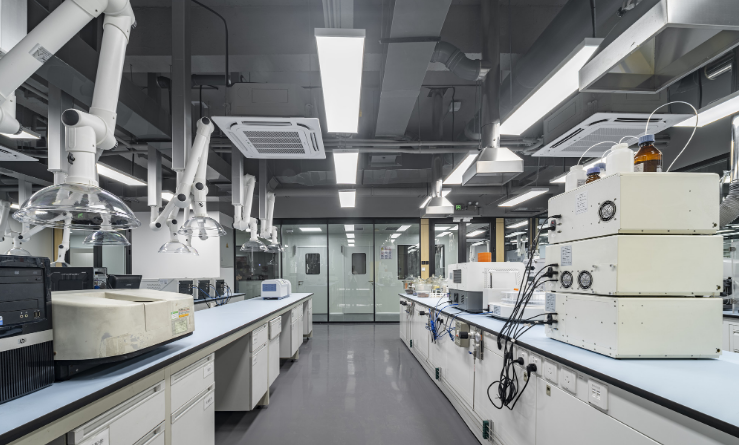
R&D alongside pilot facilities is part of how Jumingchem supports CDMO and electronic-grade scale-up.
About Jiangsu Juming Chemical Technology Co., Ltd.
Jiangsu Juming Chemical Technology Co., Ltd., founded in 2017 and located in Jiangsu Province, China, integrates R&D, production, sales, and service. The enterprise is headquartered at Jiangyin, Wuxi City, Jiangsu, China, and states total factory area of 78,000 m², an R&D center of 3,000 m², a pilot plant of 300 m², a GMP workshop of 600 m², and annual production capacity of 60,000 tons. Its main product categories in the electronic chemicals space include 5-Methyl-1H-benzotriazole (CAS 136-85-6), vinylbenzyl chloride isomers and mixed products, and BPADA (CAS 38103-06-9). Approximately 70% of output is exported, with sales to the USA, Korea, Japan, Taiwan region, Germany, Southeast Asia, the Middle East, and other markets. Jumingchem is also the corporate entity operating the Jumingchem brand used in this article.
Corporate contact: email sales@jumingchem.com, phone/WhatsApp +86 159 6162 4309, website https://en.jmchemchina.com/.
Appendix: Supplier Audit Checklist for Electronic-Grade Chemicals
- Process type: batch or continuous flow, and which production line/plant will manufacture the ordered product.
- Purity limit statement: element list, method (e.g., ICP-MS), release limit, and historical data summary.
- Cleanroom class: filling environment for electronic-grade materials.
- QC instruments: ICP-MS, HPLC, GC availability and in-house or third-party testing.
- Documentation: batch-specific COA, MSDS, B/L, packing list, commercial invoice; REACH where required.
- Traceability: lot retention policy and sample arbitration process.
- Logistics: cold-chain capability, temperature monitoring, packaging, and hazardous goods documentation.
- Commercial risk: shelf life, quality guarantee period, inspection arrangement, and replacement policy.
Have Questions or Need More Details?
Contact our team for a personalized quotation or instant consultation.
Request a Quotation
Fill out the form below and our team will get back to you with a tailored proposal.
WhatsApp Direct Chat
Prefer to chat in real-time? Message us on WhatsApp for instant assistance & quick answers.
- Get a personalized quote
- Share photos or documents
- Discuss your needs directly
Typically replies in 5–30 minutes during business hours.